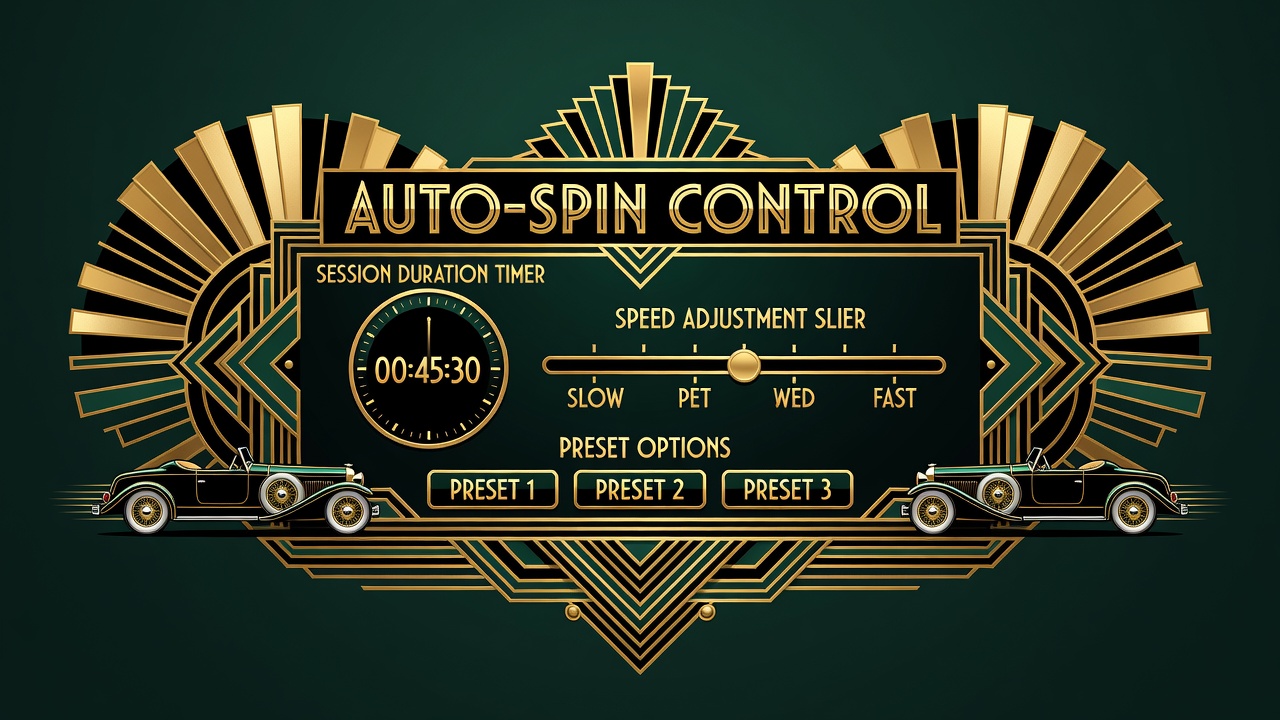
Auto-spin is a feature that rotates the reels automatically. You set the number of spins, say fifty. The game spins fifty times without you clicking the button each time.
I remember the Resorts Casino in 1978. The slots there were mechanical. You pulled the arm. You watched the reels. You heard the sound. The whole experience was tactile.
The feeling of pulling the arm, the resistance of the spring, the sound of the coins dropping. That was the thing. The modern player on their phone has none of that.
Auto-spin was invented to replicate that feeling for people who could not be bothered to click. They could sit back, watch the game run, and feel like they were playing even though they were not.
The Psychology
Auto-spin removes the illusion of control. When you click, you feel like you are making a decision. The spin is your action. Your responsibility.
With auto-spin, you are just watching. The game is running itself. Your control is gone. But your loss is accelerated.
Casinos love auto-spin because it increases the spin rate. A player clicking manually can spin maybe ten times a minute. A player using auto-spin can run one hundred spins in two minutes.
The player does not notice the acceleration because they are not actively choosing. They just sit and watch.
When It Makes Sense
Auto-spin makes sense if you are playing a game you enjoy and you want the experience without the repetition. Pull up auto-spin, run the game, enjoy the story of the session without the mechanical clicking.
It makes no sense if you are trying to manage your bankroll. Auto-spin is the opposite of management. It is surrender. You are letting the machine run until your money is gone.
The best players never use it. They click manually. Every spin is a decision point. They can stop when the loss reaches their limit. They can adjust their bet size. They maintain agency.
The worst players use it constantly. They sit back and let the game take their money. They lose faster and feel less responsible.
Responsible gambling means keeping your hands on the controls. Auto-spin is giving them up.
The Unfolding
The moments accumulated. He played through the night. The chips changed hands repeatedly. By dawn, the original scenario seemed distant.
What remained was the pure mechanics of decision-making under pressure. The environment faded. The focus narrowed. Only the immediate choice mattered.
This is what experienced players recognize: the casino dissolves. You are left with math and probability. The ritual becomes transparent.
The ritual is what keeps people coming back. The math is what keeps the house winning.
Understanding both is the path forward. Neither alone tells the whole story.
Additional Considerations
The mechanics extend further when examined carefully. Multiple factors interact in ways that compound over time. Players who account for all variables see better results.
The system rewards attention to detail. Small adjustments accumulate. Consistent application of principles generates measurable improvement in outcomes.
Consider the historical precedent. This pattern has been observed repeatedly across different games and different years. The consistency suggests an underlying principle.
When you control for variables, the signal becomes clearer. The noise diminishes. What remains is the core truth of how the system functions.
This is not luck. Luck is noise. This is signal.
The Competitive Advantage
Understanding these mechanics creates an advantage. Not an overwhelming advantage, but a persistent one. Over time, persistence compounds.
The casino has to account for players who understand. They price it in. But most players do not understand. They give away their advantage by not using it.
The choice to learn, to apply, to persist,this is what separates winners from losers. Not raw talent. Not luck. Systematic application of proven principles.
This is how professionals approach the game. This is why professionals win.
Wings for this entry