In this entry3 parts
One might ask: What is the moment at which a Canadian's choice to deposit funds at a casino becomes inevitable? Socrates would have pressed this question further. He would have asked whether the bettor chooses the payment method or whether the payment method, by its very design, shapes the choice itself.
Interac is not a company in the sense we understand commerce. It is a protocol. A Canadian financial infrastructure so woven into daily life that most Canadians never think of it as a choice at all. They think of it as the way things are done. This is precisely where philosophy becomes useful. Because Interac's dominance in Canadian gambling deposits reveals something about how systems work when they are transparent.
The Mechanics of Trust
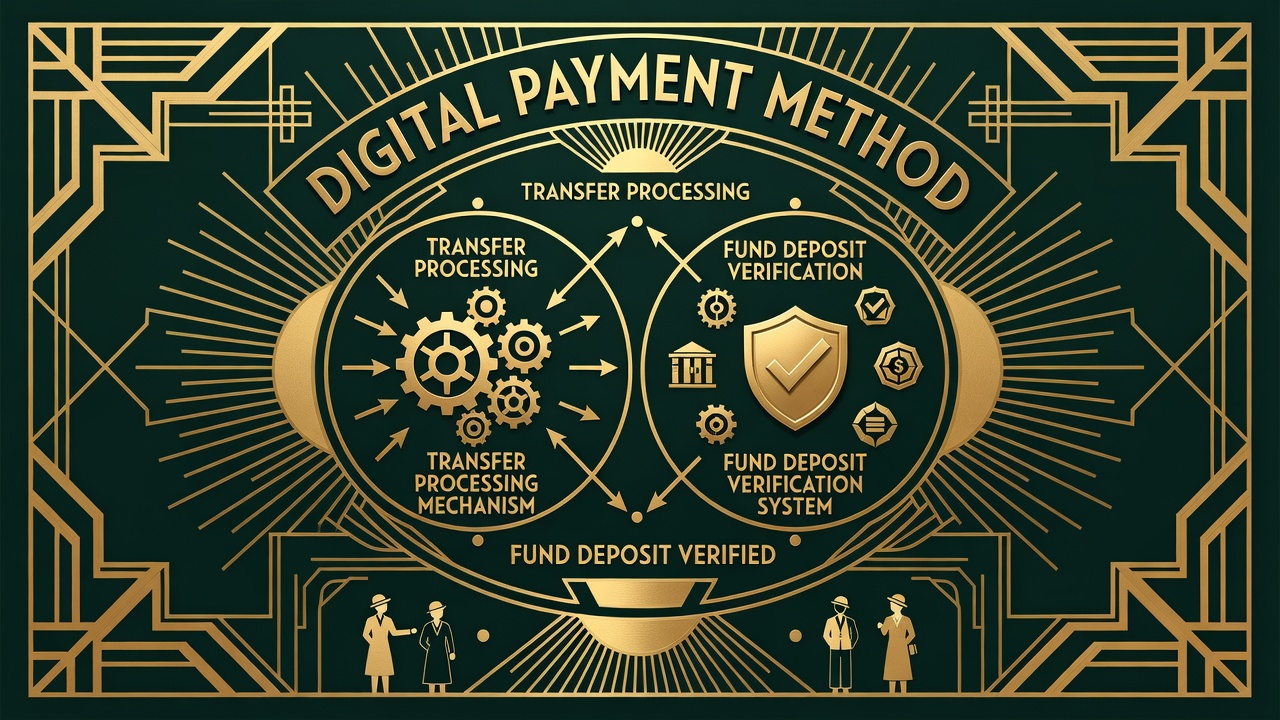
When you deposit at a Canadian casino using Interac, what you are actually doing is instructing your bank to move money from your account to an operator's account. The instruction goes through a shared ledger system that connects most major Canadian financial institutions. This is direct bank transfer. There is no intermediary currency, no foreign exchange layer, no credit card company taking a cut. The money moves at the speed of the infrastructure itself.
The player often feels, during this moment, that they are in control. They see the amount they have chosen to deposit. They type it into a form. They click a button. They authenticate with their bank. And then the money is gone. This entire sequence takes minutes. It is remarkably frictionless.
But what has actually happened? The bettor has created a permanent record. Their bank now has a transaction log showing a payment to a gambling operator. This record is auditable. It persists. In the moment of deposit, the player experiences freedom. But freedom and accountability are not the same thing. Interac creates accountability.
The operator, meanwhile, has received funds that are irreversible. A credit card deposit can be charged back. A wire transfer can be disputed. An Interac transfer, once cleared, is final. This asymmetry favors the house. The player cannot undo the deposit through their financial institution. Only the operator can refund it, by their choice. Here is a question worth sitting with: Does the ease of payment make it easier to make poor decisions? Does frictionless transfer enable faster loss?
Why Casinos Prefer It
The operator's perspective is straightforward. Interac transfers arrive with certainty. Chargebacks are extremely rare because Canadian law makes them difficult. The funds are usable immediately. No currency conversion costs. The payments are domestic, meaning no compliance with international wire-transfer reporting.
From the casino's view, Interac is nearly perfect. It is the infrastructure Canadian bettors already use for shopping, paying bills, splitting rent. The player doesn't have to create a new account, use a credit card, or navigate crypto. It is friction-free for both parties. But friction, in gambling, is a harm-reduction tool. When friction disappears, so does the chance to pause and reconsider.
- A deposit via Interac creates a direct link between the player's bank account and the operator's earnings. There is no separation. No time for reconsideration after the initial decision.
- The player sees their own bank balance decline in real time. Unlike a credit card, where debt accumulates across statements, Interac shows immediate loss.
- Interac's integration into Canadian banking means casinos can offer it without special payment processors. The infrastructure cost is zero.
- Chargeback rates on Interac are less than 0.5%. Compare this to credit cards at 1-3%. Operators prize irreversibility.
The Philosophical Core
Why examine payment methods at all? Because payment methods are not neutral. They shape behavior. A person who must write a check thinks differently than someone tapping a card. The conscious act of writing changes something. Interac removed the check-writing step and replaced it with a form. The form is easier. But easier is not always better.
A Canadian bettor using Interac deposits feels they are using a national system, one designed for them, built by their banks. There is a sense of legitimacy that comes with that familiarity. The payment method, in other words, smuggles in a sense of safety that may not exist. The operator did not design Interac. Interac designed the operator's access to Canadian funds.
"The ease with which we can do something often determines whether we will do it, not whether we should." The choice to deposit, in this sense, is made partly by the payment method itself.
When does the Interac deposit become a problem? Not always immediately. The problem is structural. It is built into the reversibility asymmetry, the real-time loss visibility, and the integration with daily financial life. Interac is too efficient at what it does. It asks no questions. It takes no time. It creates the conditions under which the bettor's impulsive choice becomes a binding financial fact.