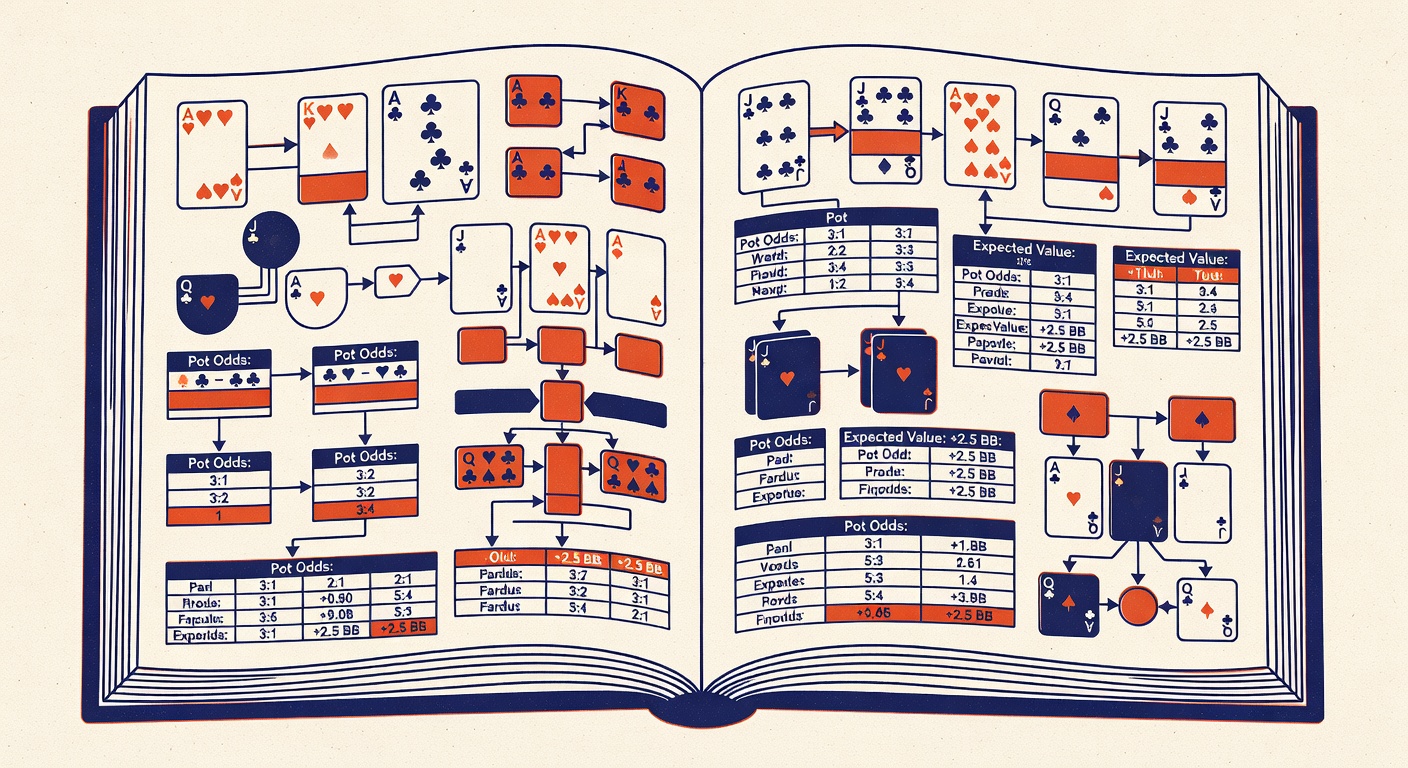
November 1978. A book lands in poker rooms across Vegas. Title: Super System: A Winning Approach to Poker. Author: Doyle Brunson, with chapters by Bobby Baldwin, Jack Keller, Caro, and others.
The poker establishment erupts. Professional players feel betrayed. Brunson has written down the secrets. Amateur players suddenly possess a roadmap.
From the distance of 2024, Super System reads as a beginner's primer. Fold a hand preflop, the modern grinder thinks. Go all-in with less than 15 big blinds, the solver says. These positions are fundamental now. In 1978, they were revelations.
What Super System Actually Contained
The book's chapters broke down poker by variant: Texas Hold'em, Seven-Card Stud, Draw Poker, Five-Card Stud. Each chapter outlined hand ranges, position importance, and bankroll management.
For Hold'em, Brunson detailed which hands to play from which positions. Under-the-gun? Fold everything except premium pairs and AK. Button? Play wider. Cutoff? Wider still.
This positional framework existed before Super System. Professional players knew it intuitively. The book made it explicit and reproducible.
The book also explained pot odds: the ratio of the pot to your bet size. If the pot is 100 and you're called to put in 25, you're getting 4-to-1 odds. If your hand wins more than 20% of the time, the call is mathematically profitable.
Again, professionals knew this. The book codified it.
Why This Was Radical in 1978
Poker had been a private, oral tradition. Knowledge passed player-to-player, game-to-game, sometimes jealously guarded.
A weak player in 1970 had almost no path to serious improvement beyond playing thousands of hands and learning by loss. Poker literature did not exist. Video poker books did not exist. The game was passed down like craft knowledge.
Super System democratized it. Any player with 20 dollars could buy the book, study the ranges, and immediately improve. The gap between casual and serious players narrowed.
Brunson's credibility accelerated adoption. He had won the World Series of Poker Main Event in 1976 and 1977. He was not a theorist. He was a champion revealing his method.
What Super System Got Right
The positional framework. Still correct in 2024. A player's position at the table determines how wide their range should be.
Pot odds calculations. Still correct. The math does not change.
Table dynamics: tight tables call less frequently, so you can bluff more. Loose tables call more, so you bluff less. Still correct.
Bankroll management: keep your stake small relative to your total bankroll to survive variance. Still correct.
What Super System Got Wrong (Or What Solvers Revealed)
The hand ranges in Super System assume fixed opponents with predictable tendencies. In modern poker, you don't just play your hand; you play your opponent's range against your range against your opponent's likely response.
This is solved poker. It requires game theory (GTO), not intuition. Super System predates serious GTO thinking by decades.
Example: Super System says fold QJ from early position. Modern solvers show that QJ has situations where it's profitable to play from early position against specific opponent distributions. The solution is more granular.
Super System says raise with AK, fold with QQ in certain spots. Modern play shows that sometimes you limp AK (you want to get called, not end the hand preflop), and sometimes you fold QQ (against certain 4-bet ranges, QQ is vulnerable).
These are not errors in Super System. They are refinements that only became visible with solver software 30 years later.
The Book's Legacy
Super System did something crucial: it professionalized poker. It made the game teachable.
An entire generation of grinders (Johnny Chan, Doyle Brunson's disciples, the generation that dominated through the 1990s and early 2000s) learned poker from this book.
Without Super System, poker remains a side game in casinos, played by degenerates and hustlers. With it, poker becomes a respectable skill game, attractable to sharp minds.
Chris Moneymaker, the accountant who won the 2003 Main Event, learned poker from internet forums and TV. He was exposed to Super System's thinking (directly or through its downstream iterations). Without that democratization, he never becomes a poker player.
Where Super System Fails Today
The book is nearly useless for a modern grinder trying to beat high-stakes cash games or major tournaments.
Why? Because every serious opponent has now read it. Or read something better. Or hired a coach who used super-solver software. Or plays on assumptions derived from GTO.
Super System in 2024 is like a chess book from 1978: historically important, technically obsolete, useful only for understanding how we got here.
A modern poker student should read Super System for context, then immediately move to solvers like GTO+ and PioSOLVER for practical study. The book teaches concepts. The tools teach the math that powered the concepts.
Why It Remains Worth Knowing
Because it reveals what professional poker used to be.
Brunson was a legendary player not because he solved poker mathematically (he didn't) but because he understood people, positions, and bankroll management deeply enough to win under conditions of uncertainty.
Today's poker is more mathematical and less intuitive. Whether that's progress is debatable. Brunson's era was more art. Now it's more science. Both have merit.
Wings for this entry