In this entry2 parts
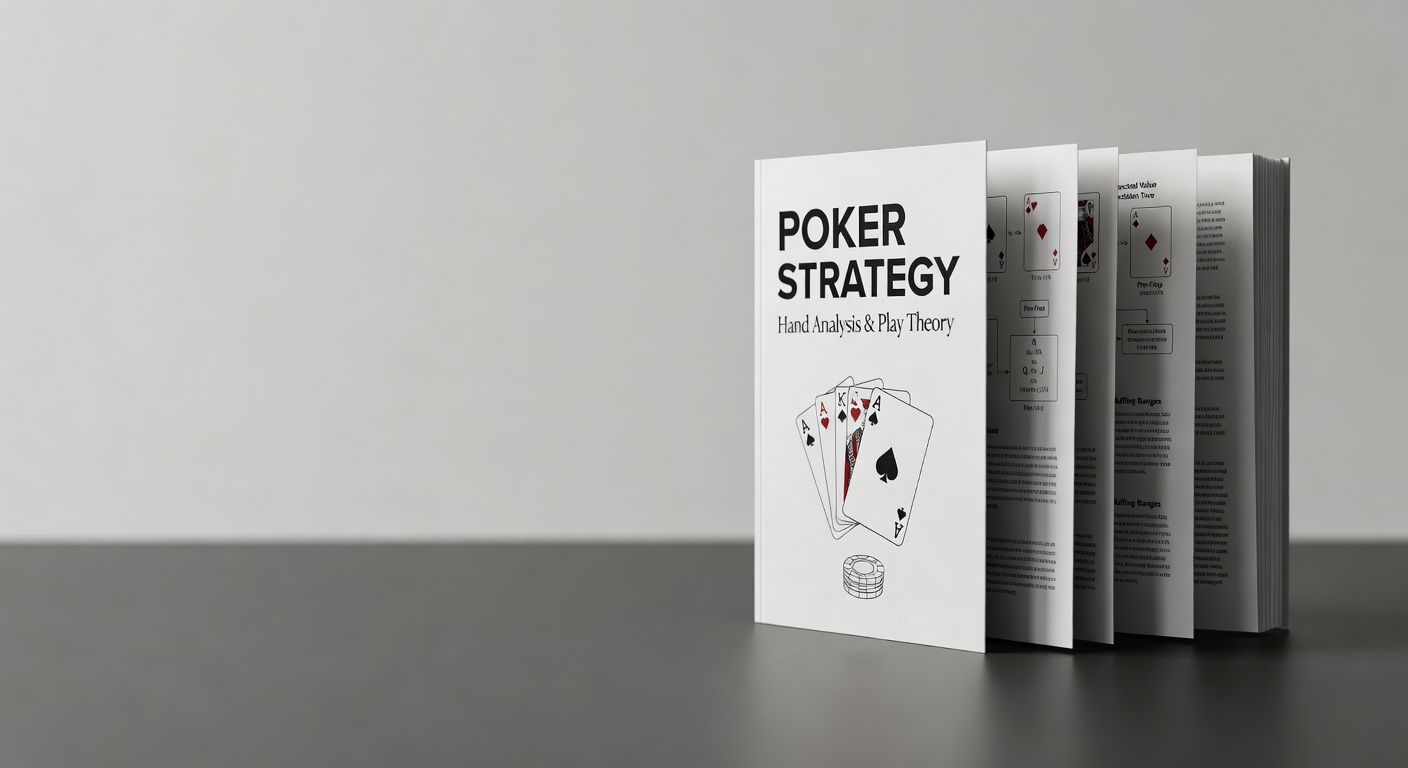
The little green-covered first edition sat on a shelf in the back of Gambler's Book Club on Eleventh Street, Las Vegas, priced at a hundred dollars in 1979 money. Doyle had put his own cash up to publish it. His pro friends, the ones he'd asked to write chapters (Baldwin for limit hold'em, Caro for draw, Reese for seven-stud, Joey Hawthorne for lowball, David Sklansky for high-low split), told him he was an idiot. You're giving the game away, Joey told him. You're going to get us all broke.
He published it anyway. The book was called How I Made $1,000,000 Playing Poker. Later reprints called it Super System. The pros were right and wrong in ways that took a decade to resolve.
Bobby Baldwin, who'd won the Main Event in 1978, had written maybe thirty pages on limit hold'em under Doyle's direction. Doyle himself had written the no-limit hold'em section, which ran over a hundred pages and was the longest single treatise on the game that had ever been set in print. That section was the part the pros were really mad about. Nobody had written down no-limit before. Players learned it by losing at it in the cardrooms of Downtown Dallas and the Dunes and the Stardust, for years, until they didn't lose anymore. It was an oral tradition, a guild secret. Doyle wrote it down.
For about six months nothing happened. The book sold slowly. A hundred dollars was real money in Carter-era America, and poker players, then as now, don't spend money they can play with.
Then something shifted. Young guys started showing up at the lower-stakes games in Vegas with something new in their play. They opened for a raise. They raised in position. They three-bet light. They put pressure on stations. The older players took their money for a while. Then they didn't. By 1982 a game at the Golden Nugget that had run soft since the Binions opened it was no longer soft. The rookies had read the book.
Some of those rookies were not, strictly speaking, rookies. One of them was a kid from New Jersey named Erik Seidel, who would go on to win eight bracelets. Another was a grinder from Texas named Bob Ciaffone, who would write his own book a decade later and dedicate it, in part, to Doyle. A third was a skinny fellow named Phil Hellmuth Jr, who turned up at the Horseshoe in the late eighties with a well-thumbed copy in his bag and an attitude large enough to populate a small municipality.
What the Book Actually Taught
The specifics mattered. The no-limit section told you things no oral tradition had ever stated outright. Don't play passively from the big blind. Raise with aces, raise with kings, raise with queens, and do not just call. In an unraised pot, play suited connectors for set-mining and straight-mining. Position is power, and position is worth more in no-limit than in any other form because the information advantage compounds with the bet sizing. You can put a man to a decision for all his chips with a mediocre hand, if the timing is right and the table image supports it. That last one, elaborated across pages of hand examples, was the single most valuable paragraph in the book. The entire concept of selective aggression with a "small pair or suited connector" got formalised there.
Sklansky's high-low section is dry and mathematical. Caro's draw poker chapter is funny and long-winded and has aged almost too well. Baldwin's limit hold'em treatment was the first serious analytic breakdown of the game as pure expected value, and it reads today like a slightly naive ancestor of the modern solver-based approach. Reese on seven-stud is a master class nobody has equalled. Joey Hawthorne on ace-to-five lowball is a curiosity; the game itself has largely died.
The book was not perfect. Some of it was wrong. The no-limit chapter advocated for some pot-committed lines that later analysis has shown to be minus-EV. Doyle himself, asked at the 2005 WSOP about a section of his own chapter, laughed and said something close to: "I got paid enough to know better." The honesty is characteristic. He wasn't selling infallibility. He was selling what he knew when he knew it.
What It Cost Him
Doyle said, later, that he figured Super System cost him a million dollars in cash-game earnings over the following decade. He said this without bitterness. By the late nineties he was rich enough from the book's royalties alone to have made the trade back, and he had watched the tournament scene he loved expand from a sixty-player main event to a seven-thousand-player cathedral, substantially because the book had taught the world how to play.
He published Super System 2 in 2005 with an expanded roster of contributors, including Daniel Negreanu on tournament no-limit, Todd Brunson on seven-stud hi-lo, and Mike Caro returning on limit. The second volume sold well but didn't have the cultural impact of the first. By 2005 the genre had been crowded out. The book that had been alone on the shelf in 1979 was now one of four hundred strategy titles on Amazon.
Doyle Brunson died in May 2023. At the service, several of the pros who had warned him against publishing the first edition spoke. Every one of them, paraphrasing, said the same thing: the book was the right thing to have written, and they were wrong to have told him otherwise. Caro, in particular, said he had made more money from his Super System chapter's royalties over forty-five years than he had ever made at a poker table.
The little green first edition now sells, when a signed copy surfaces, for between four and eight thousand dollars. The sixth edition, paperback, is still in print. A young player buying it today pays less for the whole book than Doyle paid in 1978 just to have the galleys typeset.
They're still taking his lessons. He's still paying it forward.
Wings for this entry