In this entry2 parts
In the autumn of 2009, an online poker player using the screen name "Durrrr" placed a prop bet with a professional player named Vanessa Selbst. Durrrr would play blindfolded against professional players in a heads-up format. The match lasted three hours. Durrrr lost approximately $54,000. He had played poker without seeing his cards, which seems a curious way to demonstrate skill, and yet the match garnered considerable interest in poker forums and gaming circles.
Three years earlier, in 2006, Durrrr (whose real name is Tom Dwan) had already become one of the most discussed figures in online high-stakes poker. He rose to prominence through a combination of aggressive play, unusual bet-sizing, and the mystique that surrounds any young player who seems to be beating very high-stakes games despite lacking the traditional tournament resume of established professionals.
The appeal of Durrrr's story, in retrospect, tells us something about how the poker world has come to understand skill, mystique, and the opacity of online gaming.
The Alleged Biggest Pots
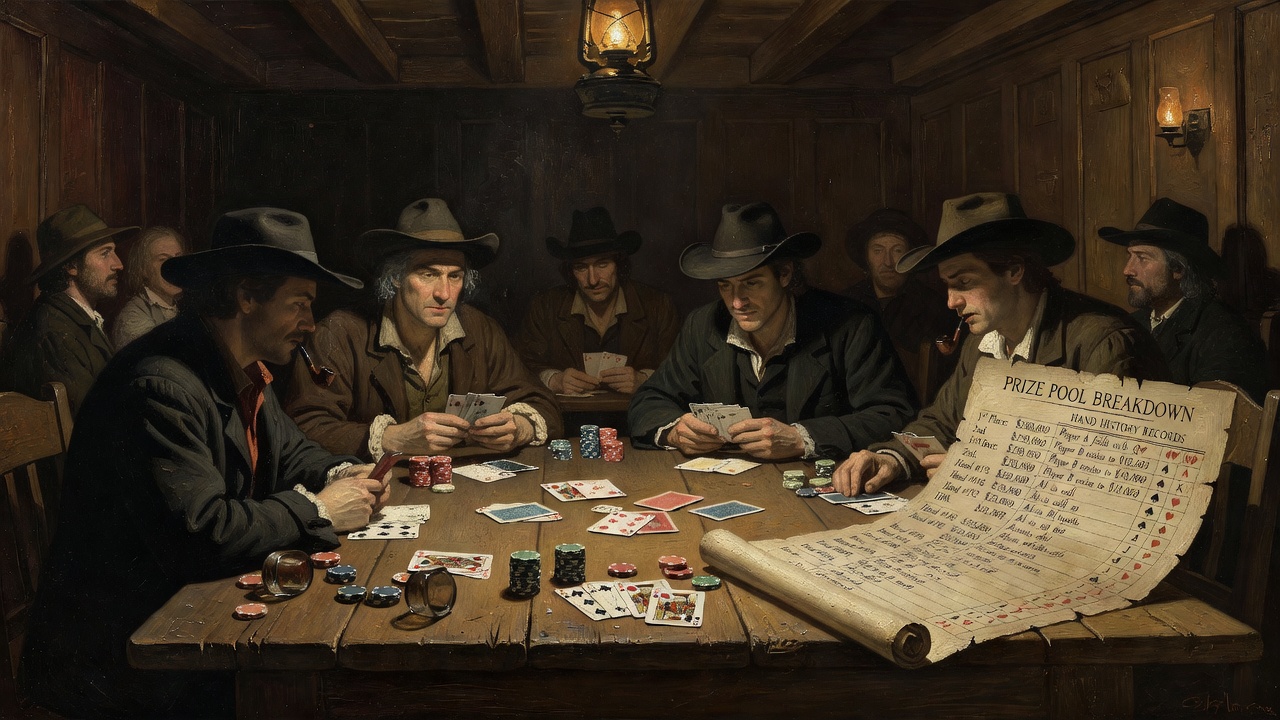
Within online poker circles, specific hands attributed to Durrrr circulate as legendary. One hand from Full Tilt Poker in 2007 is said to have involved a pot exceeding $300,000. According to the hand history (which comes from internet forums, not official sources), Durrrr played 10-8 of spades against a professional known as ImaLuckSBox, who held King-King. The board ran out King-Jack-8-7-3. Durrrr bet, ImaLuckSBox moved all-in, Durrrr called and won the hand.
This hand, assuming the hand history is accurate, demonstrates the advantage of position and the risk of playing high cards out of position in early rounds. King-King is a strong hand in isolation but vulnerable to a wide range of holdings when played out of position against an aggressive opponent. Durrrr's willingness to call a large all-in bet with a modest holding (10-8) suggests either a read on his opponent's hand or a willingness to accept unfavourable odds.
But here we must pause. These hand histories exist in forums. They are not verified by Full Tilt Poker (which shut down in 2011 following a bankruptcy proceeding). They are stories. This is the difficulty with online poker history. There is no official record that outsiders can verify.
The Uncertainty of Online Poker Records
When a hand occurs in a live casino game, multiple people witness it. Casino documentation exists. Tournament organisers maintain records. But online poker, at the highest stakes, often occurs in private games with no broadcast and no archival requirement. The only record is the hand history file maintained by the operator.
Full Tilt Poker's closure meant the loss of their server records. Hand histories played on Full Tilt in 2006, 2007, 2008 became, for practical purposes, unreliable. What remains is what players remember, what they reported in forums, what they claim to have seen. This is a notoriously inaccurate historical record.
Durrrr played on Full Tilt, PokerStars, and other platforms. The biggest pots he played in may have been in private games arranged through online forums, with no operator record whatsoever. One story has Durrrr participating in a $500,000 sit-and-go game on PokerStars. Another places him in a $1 million private game. These stories are recounted as fact within poker communities. The evidence for them is hearsay.
- Full Tilt Poker went bankrupt in 2011; hand history records were lost
- Online hand histories depend on operator integrity and archival
- Private games conducted through online forums leave no permanent record
- Celebrity poker hands survive as folklore, not documentation
What remains certain is that Tom Dwan was extraordinarily skilled at the subset of poker that occurs online. He won money at very high stakes. Whether the specific hands attributed to him are accurate, and whether his biggest pots are as large as legend suggests, remains a matter of informed speculation rather than verified fact. The blindfold match with Vanessa Selbst happened; the $300,000 pot against ImaLuckSBox probably happened; but their exact terms have become more narrative than history.
This is the curious position of online poker history in the early 2000s. It generated enormous sums of money and produced players whose accomplishments were real, and whose documented feats remain fundamentally unverifiable.
Wings for this entry