The Sit-and-Go emerged as a tournament format in the late 1990s, when online poker rooms sought a faster alternative to traditional multi-table tournaments. Party Poker introduced the format around 1998, and within a few years, it became the most played poker variant on the internet. The appeal was immediate: structured competition, short duration, and the possibility of consistent results through disciplined play.
A Sit-and-Go is a single-table tournament, typically six to nine players, that begins as soon as the table fills. No schedule governs the start time; the moment the last seat is taken, the game commences. This format was revolutionary because it solved a problem that had plagued casual poker players: the unpredictability of traditional tournament schedules. A traditional tournament in Las Vegas in 1995 might require four hours; a Sit-and-Go could conclude in 30 minutes.
The Historical Context and Strategic Evolution
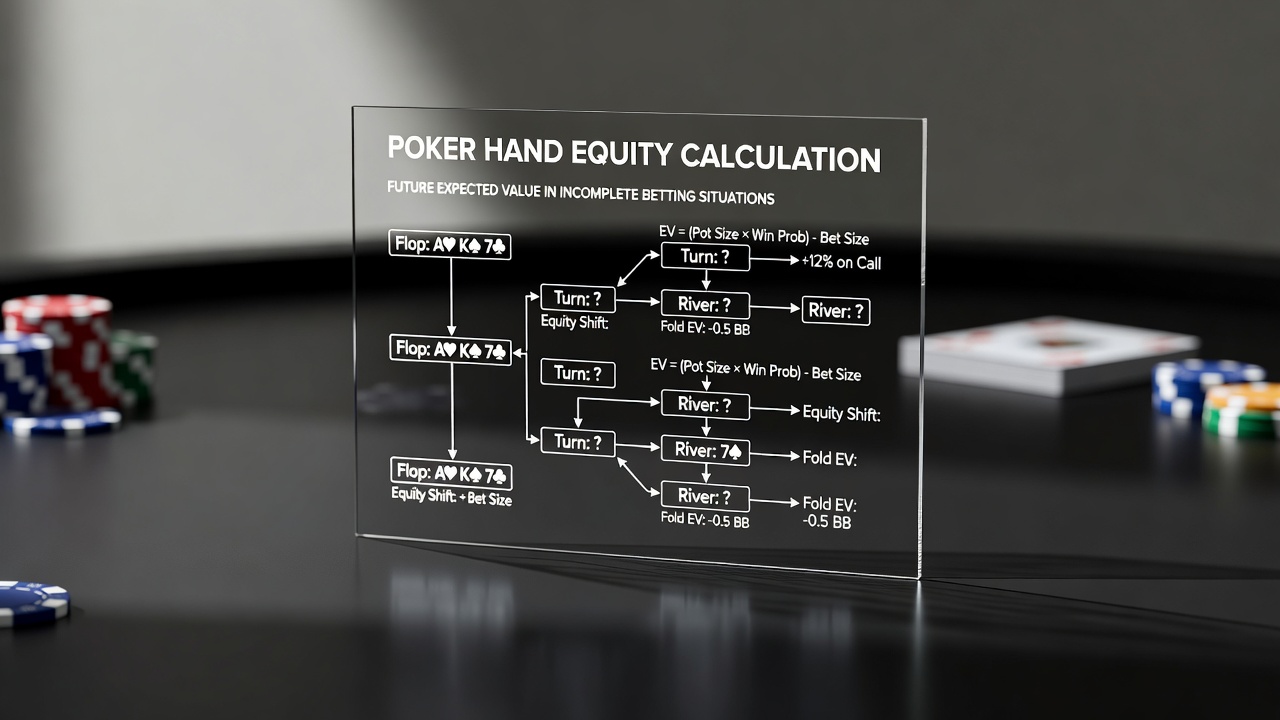
By 2005, professional players had begun publishing mathematical analysis of Sit-and-Go strategy. David Sklansky's work on tournament mathematics became essential reading. The key insight was that Sit-and-Go strategy diverges sharply from cash game strategy in the endgame. When the blinds are high relative to remaining stacks, the game becomes almost purely mathematical: fold, shove, or call. The traditional concepts of hand reading and multi-street play nearly disappear.
The format's popularity peaked around 2007-2008, when sites like PokerStars reported billions of dollars in annual Sit-and-Go volume. The game produced a distinct class of professional players. Names like "Aro" and "Tonkaaaap" became legendary on PokerStars leaderboards, players who earned six figures annually by playing thousands of Sit-and-Gos, winning consistently through tight mathematical discipline.
The consistency in Sit-and-Gos comes from several factors specific to the format. First, the short duration means you play hundreds of tournaments per month, not dozens. Second, the format rewards tight, mathematically sound play. Third, variance in a short tournament is lower than in a cash game, allowing skilled players to realize their edge more quickly.
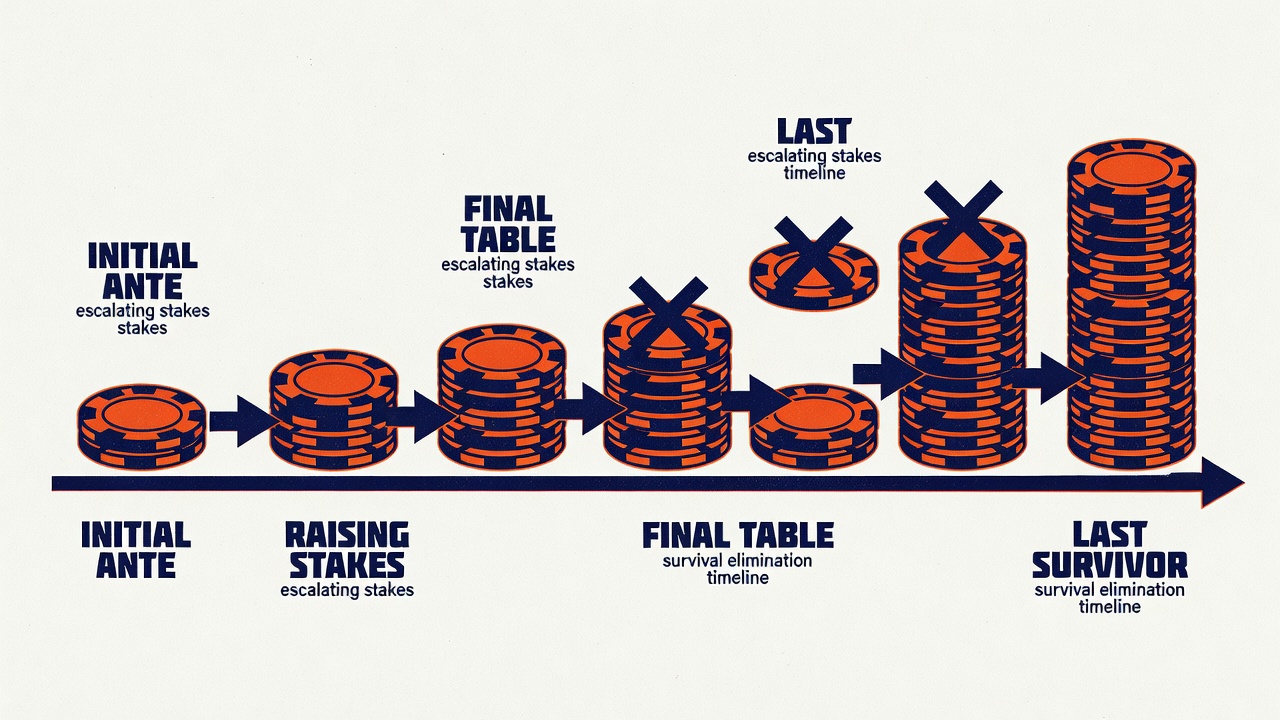
The structural progression of a Sit-and-Go follows a predictable timeline. In the early phase (levels 1-3), stack sizes are large relative to blinds. Traditional poker skills matter: position, hand selection, aggression. In the middle phase (levels 4-6), blinds accelerate and stack-to-blind ratios tighten. Decisions simplify. By the final table, only the bubble and payoff structure matter.
What distinguished successful Sit-and-Go professionals from casual players was acceptance of this reality. Amateurs played every hand with the same psychology they used in cash games. Professionals adjusted their entire decision-making process based on the stage of the tournament.
The data supports this approach. Analysis of hand histories from 2006-2010, when Sit-and-Go records were systematically archived, showed that players who modified their strategy based on stack depth won at significantly higher rates. Players who maintained static hand ranges and aggression levels showed breakeven or negative results.
Regulators in different jurisdictions treated Sit-and-Gos with varying degrees of approval. In the UK, the Gambling Commission permitted them under the same framework as traditional tournaments. In the US, the 2006 UIGEA created significant disruption, though offshore sites like PokerStars and Full Tilt continued offering Sit-and-Gos to American players until 2011.
By 2015, the poker landscape had shifted. The explosion of casual poker meant that Sit-and-Go play became less attractive to full-time professionals, as the talent pool tightened but rake remained constant. Yet the format persists on all major sites. Players still earn consistent results through Sit-and-Go play because the mathematical principles remain unchanged: tight play in early stages, aggressive pushing in late stages, precise bankroll management across hundreds of tournaments.
The lesson from Sit-and-Go history is not that the format guarantees profit, but rather that format-specific strategy creates an edge. When you adapt your play to the structure, you win. When you don't, you lose. This principle holds today as it did in 2002.