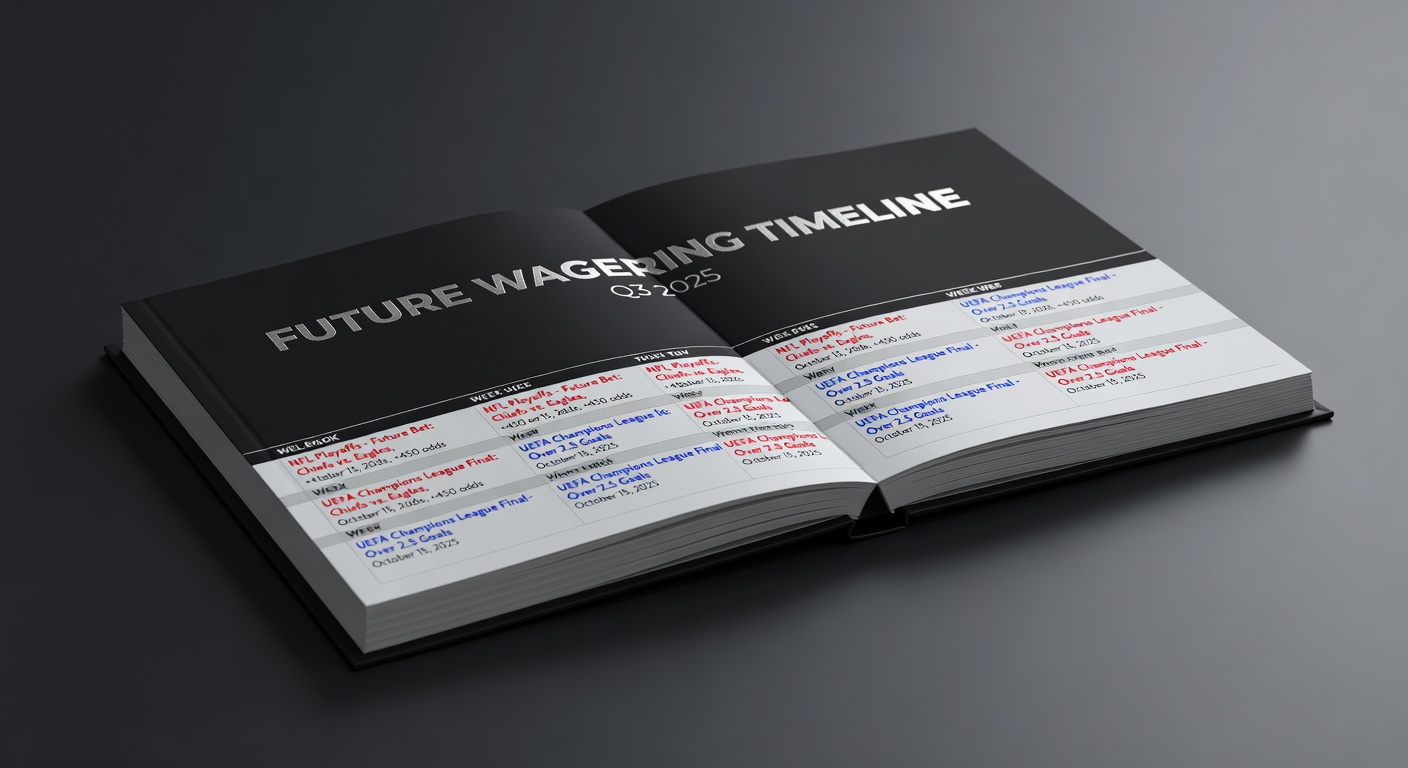
A bettor at DraftKings in August places a 100-dollar bet on the Kansas City Chiefs to win the Super Bowl at 9-to-1 odds. The Super Bowl is in February. The bet will sit for six months.
If the Chiefs win, the bettor collects 1,000 dollars. If they lose, the 100 dollars is gone.
This is a futures bet. The outcome is months away. The bettor's job is to value the current odds against the probability of the outcome.
The Valuation Problem
A futures bet is an implied probability. 9-to-1 odds imply a roughly 10% probability. The bettor is asking: is the Chiefs' true probability of winning the Super Bowl greater than 10%?
If yes, the bet has positive expected value. If no, it doesn't.
The bettor must estimate the true probability (which is unknowable) and compare it to the implied probability (which is calculable from the odds).
The Advantage from Information
A bettor who has superior information about team strength, injuries, matchups, or coaching changes can estimate probabilities better than the consensus.
If you know a team's starting quarterback is returning from injury and will be fully recovered by the Super Bowl, and the market hasn't priced this in, you have an edge.
This is value betting: exploiting the gap between market odds and your estimated probability.
The Risk from Volatility
A futures bet is capital locked for months. If you place the bet and circumstances change, you cannot easily exit.
Some sportsbooks allow you to cash out early (sell your position back to the book for a reduced payout). Others don't.
The inability to exit means you bear risk you didn't intend to bear. A team you favored early gets worse. An injury changes the landscape. You're trapped in the position.
The House Edge
Sportsbooks build a margin into all odds. A true even bet might be listed as 11-to-10 (slightly favoring the book).
This margin is wider on futures because the book is holding capital longer and faces more uncertainty over months.
You can expect 5-10% margin on futures bets, compared to 2-3% on immediate bets.
Valuation Strategies
Contarian: the market overvalues favorites. Bet on underdogs at high odds, expecting the favorite to fail. This works if you're right that the market is overreacting.
Value: find mispriced outcomes. A team with solid fundamentals priced at 30-to-1 might be 50-to-1 true odds. That's value.
Hedging: place a futures bet early, then hedge with smaller bets on opponents as the season develops. Lock in profit regardless of outcome.
The Worst Mistake
Placing a futures bet without having estimated the true probability first. You're guessing, not calculating.
Do the homework. Assess the team, the odds, the probability. Only then decide if the bet has value.
The Practical Reality
Futures bets are seductive because they're fun (you can think about your team all season and imagine the payout). They're also usually bad bets because the house margin is high and most bettors are overconfident in their probability estimates.
Professional bettors do place futures bets, but they do so with clear value assessments and strict position sizing.
Wings for this entry