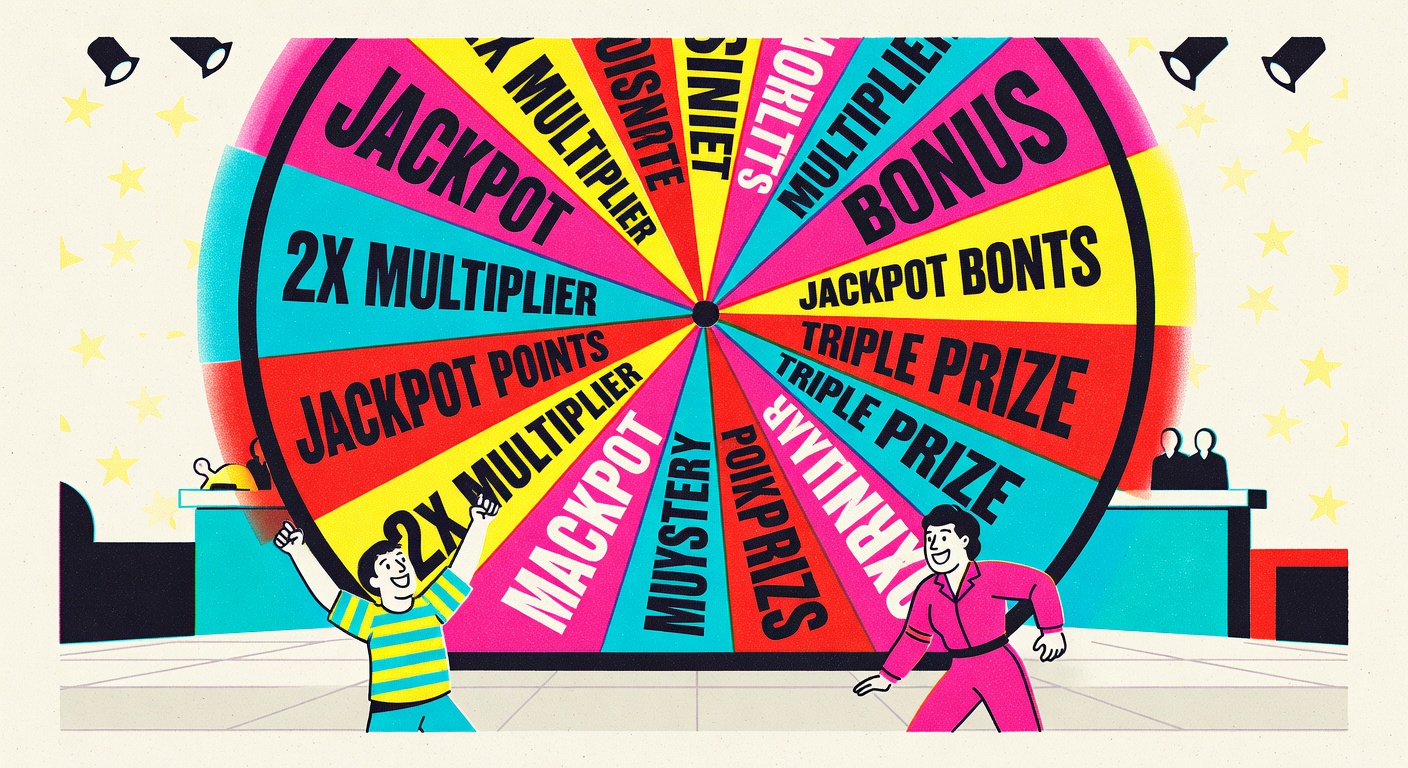
Crazy Time arrived in March 2020. Monopoly Live followed in December 2019. Both were produced by Evolution Gaming, a Swedish company founded in 1999. The products mark a shift in online gambling from traditional card and table games to hybrid television-casino hybrids.
The Technical Foundation
These games require four components: a live dealer or host, a mechanical wheel, camera systems, and a broadcast infrastructure. Evolution builds this in studios located in Riga, Malta, and other licensed jurisdictions. The broadcast travels to operators worldwide.
A game of Crazy Time follows this sequence. Players place bets on their mobile or desktop client. A host, visible on camera, operates a physical wheel containing segments labeled with multipliers and bonus rounds. The wheel spins. The outcome is recorded. Payouts are calculated and credited to player accounts.
Monopoly Live is similar but the wheel is supplemented with an augmented reality layer. A physical wheel exists in the studio. A digital Monopoly board is overlaid on the broadcast. Players see both simultaneously.
Design Lineage
Both games derive design principles from television game shows. Crazy Time borrows from Wheel of Fortune: a spinning wheel, random outcome, rapid gameplay, visible host. Monopoly Live borrows from the board game itself, which was first published in 1935. The television version was syndicated in the 1980s and 1990s.
Evolution's innovation was translating these television formats into gambling products with real money stakes. The format worked because it provided sensory stimulus comparable to traditional casino games but with higher entertainment value. A roulette wheel spins once per minute. Crazy Time spins roughly every 90 seconds but includes bonus rounds that extend play and increase engagement.
The Mathematics
Crazy Time's base bet pays even money on a simple color or number prediction, similar to roulette. Additional bets on multiplier zones or bonus rounds pay at higher rates, ranging from 5 to 1 to 10,000 to 1.
The game was designed with a house edge of approximately 2-2.5 percent on the primary bets. This is lower than traditional online slots, which often carry a house edge of 4-6 percent. The trade-off for operators: lower edge per hand but higher session frequency.
Monopoly Live's mathematical structure is more complex. The base bet is even money (50/50 split between GO and property outcomes). Property bets pay based on position and are grouped into color sets. A complete monopoly wins at multiplied rates, ranging from 5 to 1 to 200 to 1.
Why Operators Adopted Them
These games filled a product gap. A player could not get roulette with perfect randomness and also get entertainment comparable to television. These games delivered both. The broadcast creates a spectacle. The wheel creates uncertainty. The host creates personality.
Operators reported player session times 30 percent longer than traditional table games. The extended engagement drove higher wagers per player per session. For Evolution, licensing fees to operators ranged from 13 to 18 percent of gaming revenue, compared to 6-12 percent for traditional live dealer games.
Regulatory Status
These games exist in licensed jurisdictions worldwide. Evolution holds licenses from the Malta Gaming Authority, the UK Gambling Commission, and other regulators. The games comply with random number generation standards. The wheels are physically manufactured, making them resistant to software manipulation.
Some jurisdictions restrict them. Germany's state-by-state regulations limit live game shows. New Jersey permits them under Atlantic City casino licenses. The United Kingdom permits them under the Gambling Commission framework.
The Player Experience Difference
Traditional live blackjack requires learning hand signals and strategy. Crazy Time requires learning nothing. Bets are placed, the wheel spins, winners are announced. The simplicity is intentional. The barrier to entry is near zero.
This accessibility explains adoption. A player who has never sat at a live table can immediately understand Crazy Time. The house edge is transparent. The rules are visible. There is no complex rule system to master.
The Broader Pattern
Crazy Time and Monopoly Live represent a category now worth approximately 3-4 billion dollars annually across European operators. Pragmatic Play launched Game Show, a competitor. NetEnt explored similar products. The format proved resilient because it solved a real problem for operators: converting television viewers into gambling customers and keeping them engaged longer.
Wings for this entry