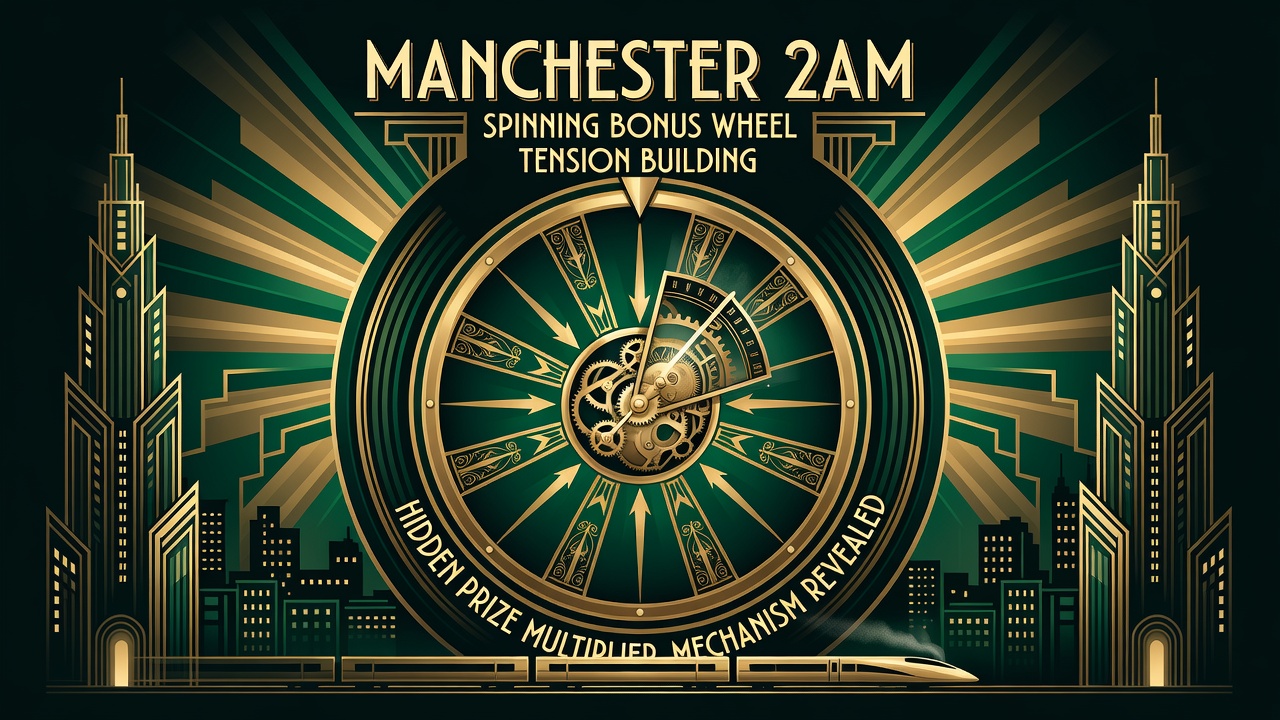
The dealer's hands move with ritual precision. The wheel sits before him in a studio in Tbilisi, ringed with LED lights. Around him, on screens a thousand miles away, players watch the feed. One of them is in Manchester, a nurse on the night shift, betting more than she should.
Monopoly Live is a game show in the shape of a casino game. Evolution Gaming, the Swedish studio behind it, streams it live to casinos worldwide. It premiered in 2019 and became one of the most popular live games available. Why? Because it is not quite roulette, not quite slots. It is something else, and that something else is designed to keep you watching.
Here is what actually happens.
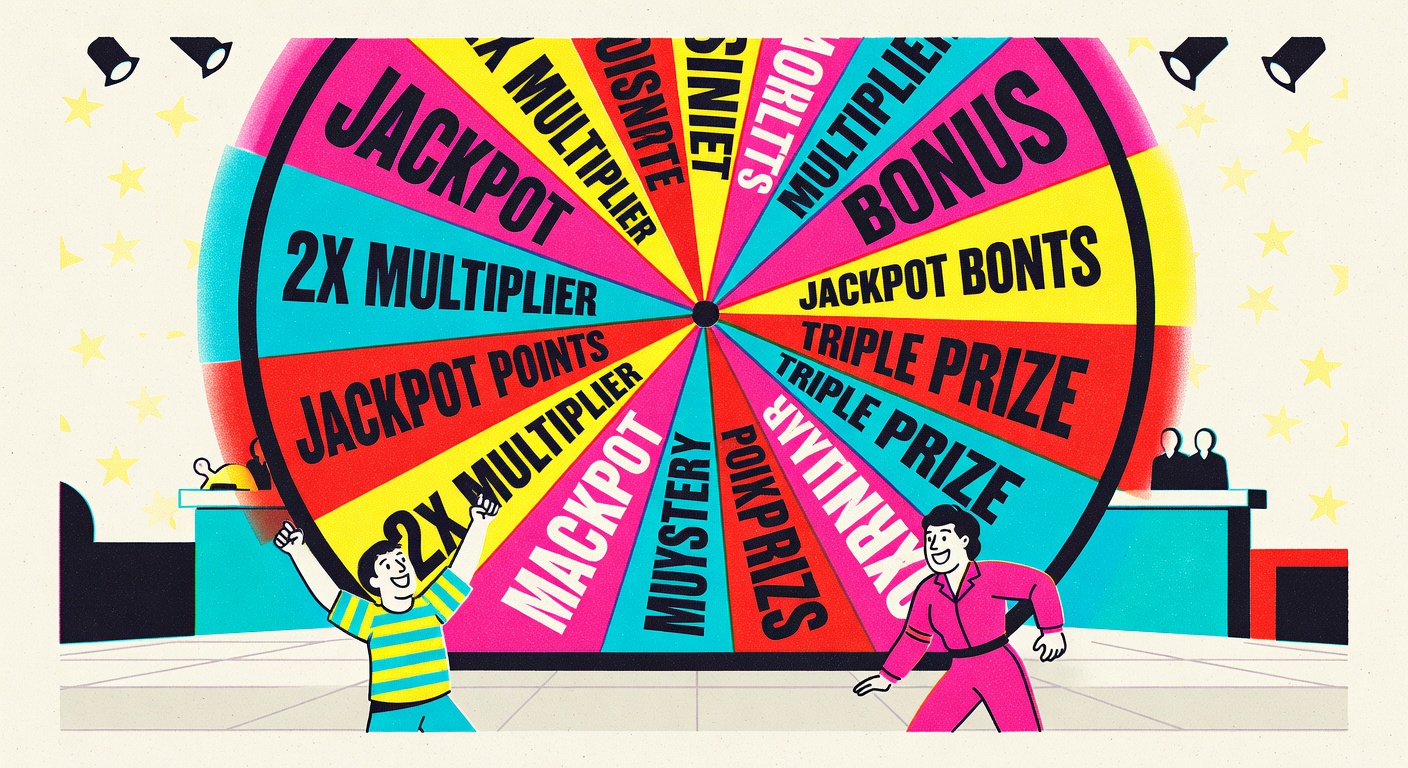
The wheel has 54 segments. Most segments show money multipliers: 2x, 3x, 5x, 10x, 25x, 50x. There is a "Chance" segment that triggers a mini-game. There is a "Monopoly" segment that launches the full bonus feature. The dealer spins. The wheel slows. It lands on something. The payout is calculated based on your bet and the multiplier that landed.
Seems simple. It is. The simplicity is the hook.
But the bonus round is where the design reveals itself. When the wheel lands on "Monopoly," the screen shifts. A Monopoly board appears. A virtual token sits on "Go." The player rolls virtual dice. Each roll advances the token around the board. Each property encountered multiplies the original bet. If you land on Boardwalk and the token stops there, you face a substantial payout.
The twist is this: you do not roll once. You keep rolling. Each roll is a new spin of the dice. You advance around the board until you land on a property or a "Go To Jail" segment, which ends the round. The more you roll, the more properties you can hit, and the multipliers stack.
The Mathematics Behind the Illusion
Monopoly Live carries an RTP (return to player) of 96.3 percent for the main game, which is standard for live casino games licensed under the MGA (Malta Gaming Authority) and UKGC (United Kingdom Gambling Commission). The design is provably fair; the dice rolls are random, generated by a certified random-number generator.
But here is what makes it psychologically potent: during the bonus round, you feel agency. You are rolling dice. You are advancing tokens. Each roll is a decision point. In reality, the outcome is predetermined the moment you trigger the bonus. The RNG determined the sequence of rolls and the properties you will hit. You are not making choices; you are watching choices unfold.
This is called the "illusion of control." It is documented in behavioral economics. People engage longer with games where they feel they are steering, even if the steering is illusory. Monopoly Live understands this. Evolution Gaming designed for this.
Why The Game Works So Well
Monopoly is a game people know. They have played it as children. Rolling dice and advancing around a board is archetypal. Evolution took that familiarity and fused it with the addictive loop of multiplier-based payouts.
The nurse in Manchester rolls the dice. She lands on a property. The multiplier is small: 2x, maybe 3x. But the roll happens again. And again. Anticipation builds. What if the next roll lands on Boardwalk? What if the multiplier is 50x? The bonus round can run for ten rolls or more. The uncertainty sustains engagement.
The house edge is built into the RTP of 96.3 percent. Over time, the math works against the player. But in the moment, in a single session, variance dominates. The nurse might hit a massive bonus and win. The illusion of control makes her feel that the win was partly earned.
The Regulatory Frame
Under MGA regulations (NGA 2018), Monopoly Live must display the RTP clearly. It must disclose that the game is powered by a certified RNG. Operators in the UK, licensed by UKGC, must allow players to set deposit limits before playing.
These protections exist because games like Monopoly Live are designed to create engagement loops. The regulations acknowledge this and try to introduce guardrails. But the guardrails are mostly post-hoc. A player has already deposited before the limit takes effect.
The Ending That Always Comes
The nurse's bonus round ends. "Go To Jail" appears. The round closes. She has won something. Not enough to cover her night shift losses. She bets again. The wheel spins. She watches the LED lights blur. She is waiting for "Monopoly" to appear again. The anticipation is the product Evolution is selling.
At three in the morning, in a quiet hospital, she closes the app. She has lost one hundred pounds more than she intended. The wheel, the board, the dice, the multipliers, they all felt real in the moment. The outcome, the house always winning, is invisible until the session is over.
Monopoly Live is not cheating. The math is honest. The game is fair by regulatory standard. But it is designed with precision to make engagement feel inevitable, and loss feel like a near-miss rather than an outcome of bad odds. Understanding how it works is the first step to playing it responsibly.
Wings for this entry