I remember the exchange window at the Resorts. A gentleman would walk up with a briefcase of dollars. The attendant would count it, exchange it for casino chips, and slip them across the counter. The transaction was visible. The money was tangible. You could hold the chips in your hand and feel the weight of your decision.
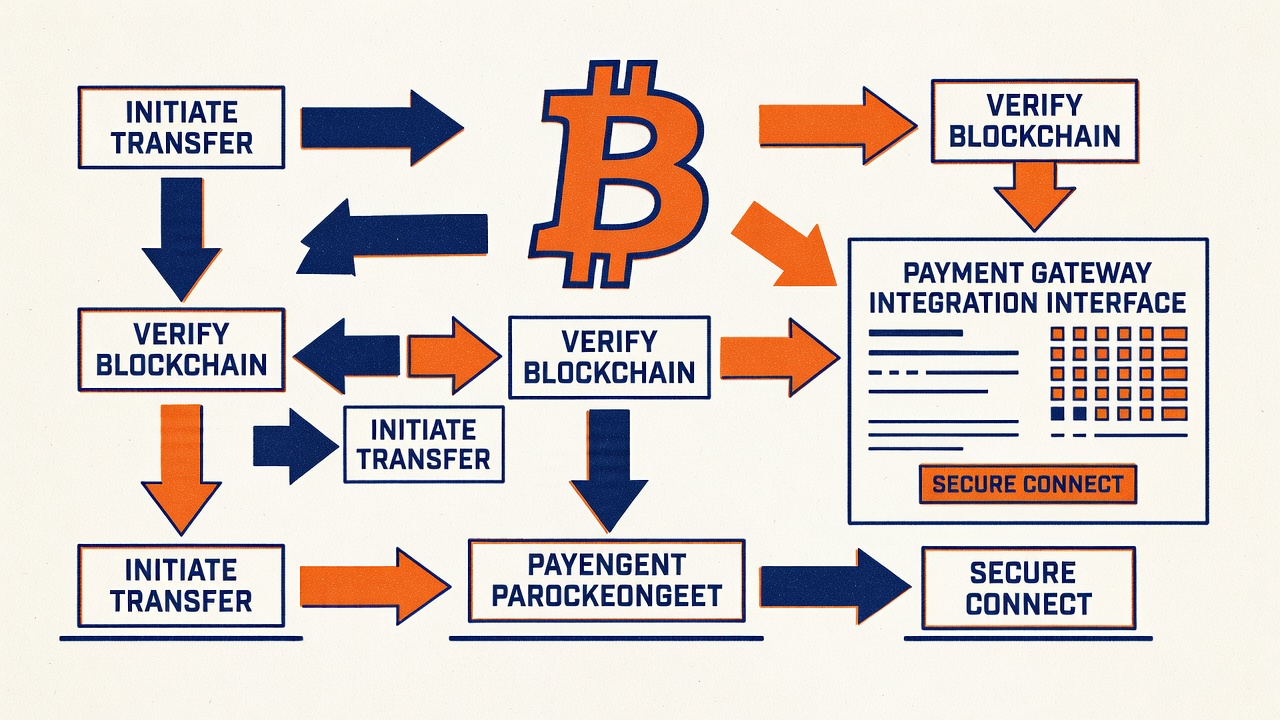
Now the exchange happens in an app. A player in Dublin opens Kraken, connects a bank account, and $500 becomes USDT in forty-five minutes. No briefcase. No counter. Just a number on a screen.
The on-ramps have changed how money enters the gambling system. Understanding them is understanding modern gambling infrastructure.
The Big Players: Kraken, Coinbase, Gemini
These are the licensed exchanges. They operate in most US states and European jurisdictions. A player deposits dollars via bank transfer or wire. The exchange holds the fiat, converts it to cryptocurrency, and credits the user's wallet.
Kraken charges $0 per bank transfer (via ACH) plus a spread (typically 0.16 percent to 0.50 percent on the USD pair). So a $1,000 deposit costs roughly $2 to $5 in spread.
Coinbase charges $1.49 per transaction or 1.49 percent, whichever is larger. On a $1,000 deposit, that is $14.90.
Gemini charges $0 on wire transfers plus a spread (similar to Kraken).
All three are regulated. Coinbase is SEC-registered. Kraken is licensed in Wyoming (a favorable jurisdiction). Gemini is NYDFS-regulated. Players can trust the money will arrive and that the USD-to-crypto conversion is fair.
The Intermediate Players: Crypto.com, FTX Alternatives
FTX used to be in this category. It collapsed in 2022, taking $8 billion of customer deposits with it. The remaining platforms (Crypto.com is the major survivor) operate with tighter scrutiny now.
Crypto.com charges 0 percent on the first $1,000 transferred, then 0.5 percent thereafter. For a gambling player moving money repeatedly, those fees add up.
The Risky Tier: Unregulated Exchanges and P2P Platforms
LocalBitcoins and similar peer-to-peer platforms connect buyers and sellers directly. No licensing. No regulation. Lower fees, higher risk.
A gambler in a jurisdiction where fiat exchanges are restricted might use LocalBitcoins to convert dollars to Bitcoin from a stranger. The transaction is irrevocable. If the seller vanishes, so does the money.
I knew a player from Manila who used this path in 2021. He lost $3,000 to a scammer who promised to sell him Bitcoin. The transaction was irreversible.
Why Gamblers Use Crypto Ramps Instead of Direct Deposits
Theory: Crypto deposits to casinos are faster and have lower fees than traditional payment processors.
Reality: Some of both. A wire transfer to a casino takes two to three days. A crypto on-ramp to a wallet takes 30 minutes, then a token transfer to the casino takes five minutes. Total time is 35 minutes versus 48+ hours. Speed is real.
Fee-wise: A wire costs $15-30. A crypto on-ramp costs $2-15. Net savings: $0-15. Not massive, but real.
Second reason: Regulatory arbitrage. Casinos licensed in Curacao or Antigua cannot accept US bank transfers easily (UIGEA restrictions). But they can accept crypto because it is not legally defined as money in many jurisdictions. A US player can fund their account in 45 minutes via Kraken-to-wallet-to-casino.
Traditional casinos licensed in Nevada or New Jersey have sportsbooks that accept bank transfers directly. Crypto casinos almost universally require the crypto step.
The On-Ramp Journey
Start to finish, a typical journey:
- Open Kraken account (10 minutes)
- Verify identity (24-48 hours, but sometimes instant)
- Link bank account (2 minutes)
- Deposit dollars via ACH (1-3 days for the money to clear)
- Buy USDT on Kraken (1 minute)
- Transfer USDT to external wallet (5 minutes)
- Transfer USDT from wallet to casino (5 minutes)
- Casino credits the account (instant to 2 hours)
Total: 2-4 days, mainly waiting for the bank transfer. Once you have done this once, the repeat is 30 minutes.
The Regulatory Future
The SEC (Securities and Exchange Commission) and CFTC (Commodity Futures Trading Commission) are tightening rules around crypto exchanges. Expect more documentation, more compliance, slower on-ramps.
The EU's MiCA regulation (Markets in Crypto-Assets, effective 2024) has tightened on-ramp standards across Europe. Documentation, travel rule compliance (disclosure of sender/receiver), and licensing are now mandatory.
This makes it slower for casual users and criminals but does not affect legitimate gamblers much.
The Long View
On-ramps are the gateway between fiat and crypto gambling. They are getting better (faster, cheaper) and more regulated (safer, slower). The equilibrium is moving toward slow and safe rather than fast and risky.
In the Atlantic City I remember, the currency exchange was a visible step. You faced a person, exchanged cash for chips, and committed. You felt the moment.
Now it is hidden. You tap an app, see a number, and the money is already in the casino. The psychological moment is gone. That might be an improvement. Or it might be a loss.
Wings for this entry