I worked fraud cases for twenty-three years. I have seen the same mistake a thousand times. A person sits in a Starbucks, connects to "StarbucksFreeWiFi," and logs into their casino account. They do not think about it. They believe the encrypted connection protects them.
It does not.
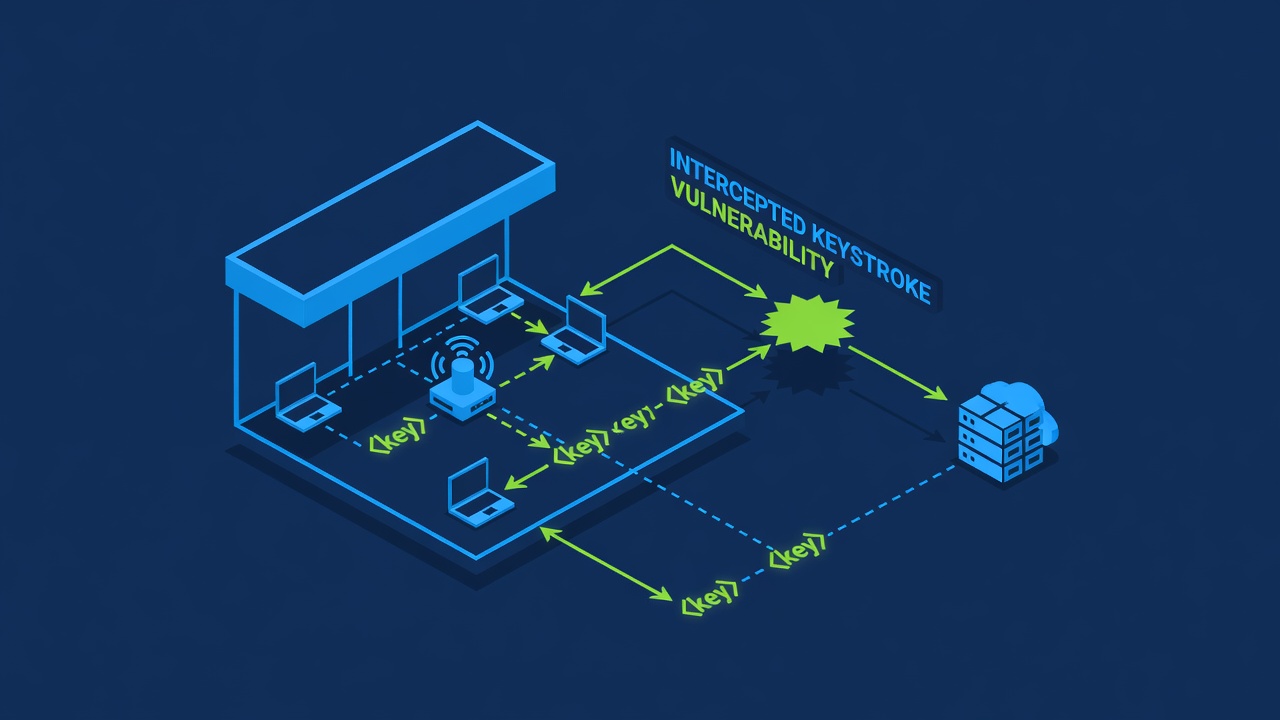
Public Wi-Fi is an interception environment. Here is how it works, step by step.
You open your phone. You see a network called "CoffeeShop_Guest." No password. You tap it. Your phone connects. You open your casino app. The app sends a login request. If the connection is not using HTTPS (encrypted), the request travels in plain text across the network. A person with basic tools, sitting in the same shop, can read it. They see your username, your password, your email address.
Even with HTTPS, there is a vulnerability window. A sophisticated attacker can perform a "man-in-the-middle" attack using a tool like Bettercap. They position themselves between your phone and the router. They intercept the HTTPS handshake. If the casino app does not pin its SSL certificate (a technical security measure), the attacker can use a fake certificate to decrypt the traffic. The app trusts the fake certificate because it is signed by a valid authority. The attacker now sees everything.
The Credential Theft Pattern
I investigated a case in Philadelphia in 2022. A woman played poker at an online site while sitting in a hotel lobby. Her username was "SarahM_Philly." An attacker in the same lobby set up a rogue access point called "HotelGuest_WiFi." She connected automatically (her phone remembered the network name from a previous hotel). For three hours, every interaction she performed on the casino site was visible to the attacker.
Her account credentials, her deposit information, her playing style, her location. The attacker logged in the next day from a different IP address, changed the password, and transferred her balance to a cryptocurrency exchange.
The casino did not catch this because the login came from her usual device and appeared to originate from her region. But the attacker controlled the account for fourteen hours.
Why Public Wi-Fi Specifically
Public Wi-Fi routers are unmanaged. There is no IT department checking them. There is no security protocol. A person can literally bring their own router, configure it to mimic the legitimate network, and broadcast it from the corner. The router is named "CoffeeShop_WiFi_5G" and sits next to the real one. Careless users connect to the fake one. The attacker sniffs everything.
Home Wi-Fi is different. Your router is configured by you. Your network is encrypted with WPA2 or WPA3. The traffic between your device and your router is protected. Yes, an attacker can hack your router if they know the password, but that is a separate vector.
Public Wi-Fi offers no such protection. The assumption should be: anyone in this building could be watching my traffic.
The Casino's Role
Licensed casinos under UKGC and MGA regulations are required to use HTTPS for all connections. They are required to pin SSL certificates (in technical terms, implement certificate pinning). They are required to implement multi-factor authentication as an option.
But these are defensive measures. They protect against standard attacks. They do not protect against a determined attacker with access to the network layer.
The best casinos require MFA for login and for withdrawal. If an attacker gains your credentials on public Wi-Fi and tries to change your password or withdraw funds, the casino will send an MFA code to your phone or email. If you do not authorize it, the request is denied.
But here is the trick: if the attacker has access to your email (because you used the same public Wi-Fi to check email), they can reset the MFA backup codes. They can lock you out while they control your account.
Practical Precautions
First, do not play on public Wi-Fi. Full stop. Wait until you are home or on your mobile data (cellular connection). Mobile data is encrypted between your phone and your carrier's network. An attacker would need access to the carrier's infrastructure, which is much harder to compromise.
Second, if you must use public Wi-Fi, use a VPN (virtual private network). A reputable VPN encrypts all your traffic and routes it through a secure server. An attacker on the public Wi-Fi network cannot see your login, your bets, or your balance.
Third, use an authenticator app for multi-factor authentication, not SMS. An attacker can intercept SMS through SIM jacking or cell tower spoofing. An authenticator app (Google Authenticator, Authy) generates codes on your device that are not transmitted over the network.
Fourth, never save your password in your browser on a public device. Never check "remember me" on public Wi-Fi. Every time you log in, type your credentials fresh.
The Bigger Picture
Online gambling is now a $500 billion industry globally. Attackers target casino players specifically because they have money and they are distracted. A player focused on the blackjack table is not paying attention to their device security.
The casinos are (mostly) honest. The payment processors are secure. The vulnerability is you, sitting in a coffee shop, trusting a free wireless network.
Do not do it. Your account is worth more than the convenience of playing in a cafe.