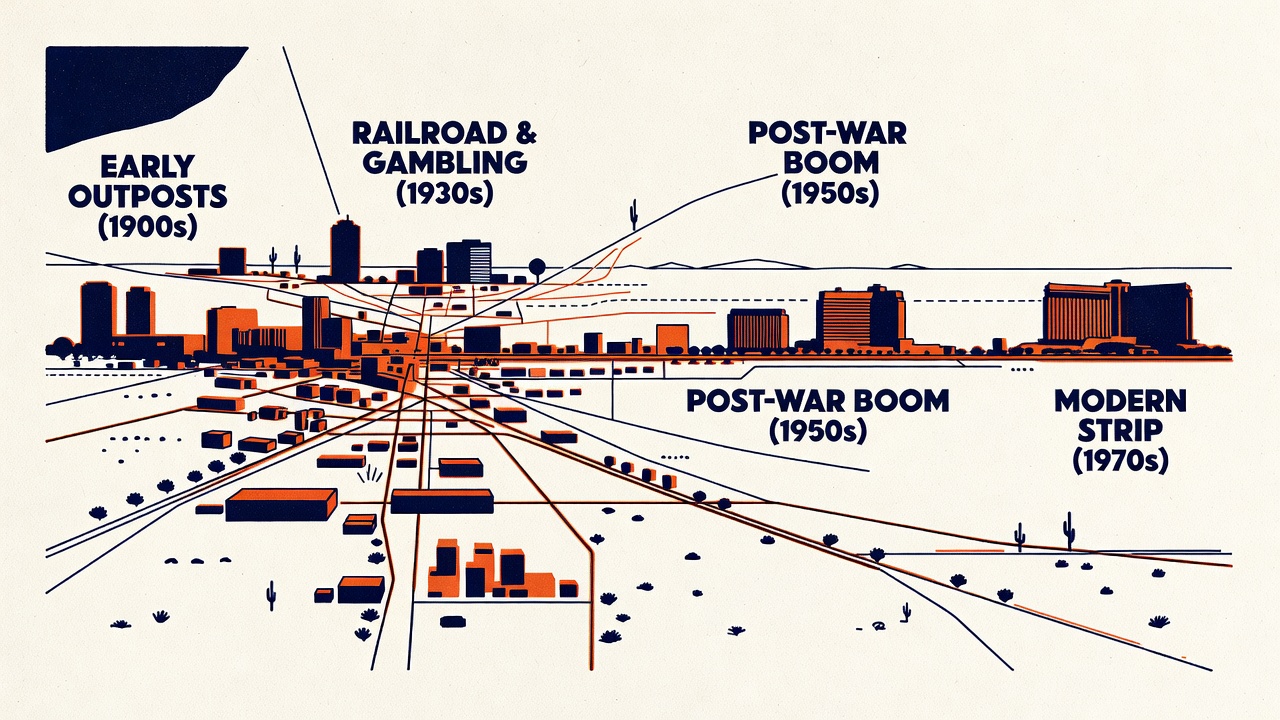
Las Vegas was a railroad stop in 1905. Forty people lived there. The railroad needed a water station. They built one. The town existed to serve the railroad.
Gambling was legal in Nevada since statehood in 1864, but Vegas was not a gambling center. Reno was. Carson City was. Vegas was nothing.
Then in 1931, Nevada legalized gambling statewide and the railroad stopped needing water stops. Automobiles were becoming common. The railroad was declining.
Some businessmen saw an opportunity. Build a casino in Vegas. Legalize it in 1931. Make Vegas a destination.
The Loss Aversion Reversal
The story of Vegas is about loss aversion and how to reverse it.
Humans are loss-averse. We feel the pain of a fifty-dollar loss more than the pleasure of a fifty-dollar gain. This is why gambling is irrational for most people. The expected loss outweighs any fantasy gain.
But loss aversion is relative to reference point. If your reference point is zero money, a fifty-dollar loss is a loss. If your reference point is having traveled to Vegas hoping to win big, a fifty-dollar loss is a possible outcome you already expected.
The casino's genius was reframing the transaction. A trip to Vegas is an adventure. You might lose money. You also might win big. The loss is not a loss; it is the price of admission to excitement.
This psychological reframing attracted people who would never gamble at home. In Vegas, gambling was not a financial decision. It was an entertainment decision. The money was a secondary concern.
Design and Infrastructure
Once the reference point was shifted, everything else followed. The casino designed spaces to maximize session length. Dim lighting, no clocks, continuous action. You lose track of time and money. You play longer than intended.
The comps (free drinks, hotel discounts) further shifted the reference point. You were not spending money; you were being hosted.
Slot machines were placed strategically to maximize time in the casino. The layout was designed by early version of behavioral economists, though they did not call it that.
Every design choice was aimed at one thing: keep the player in the casino longer, so they gamble more, so the house wins more.
By 1960, Vegas had completely transformed. From a railroad stop to a city of fantasies. The population was still small, maybe fifty thousand. But the casino revenue was enormous.
The Prospect Theory Application
Prospect theory says people prefer certain outcomes over risky ones. Give people a choice between fifty dollars guaranteed or a 50% chance at one hundred dollars, they take the fifty.
But in Vegas, the casino flipped the equation. You could spend two hundred dollars guaranteed on food, hotels, and entertainment. Or you could spend two hundred dollars with a 1% chance at ten thousand dollars on gambling.
The second option is irrational. But it is also more exciting. The psychological value of the 1% chance outweighs the expected financial loss.
This is not a bug of Vegas. It is the entire design. Vegas exists because behavioral economics works.
Wings for this entry