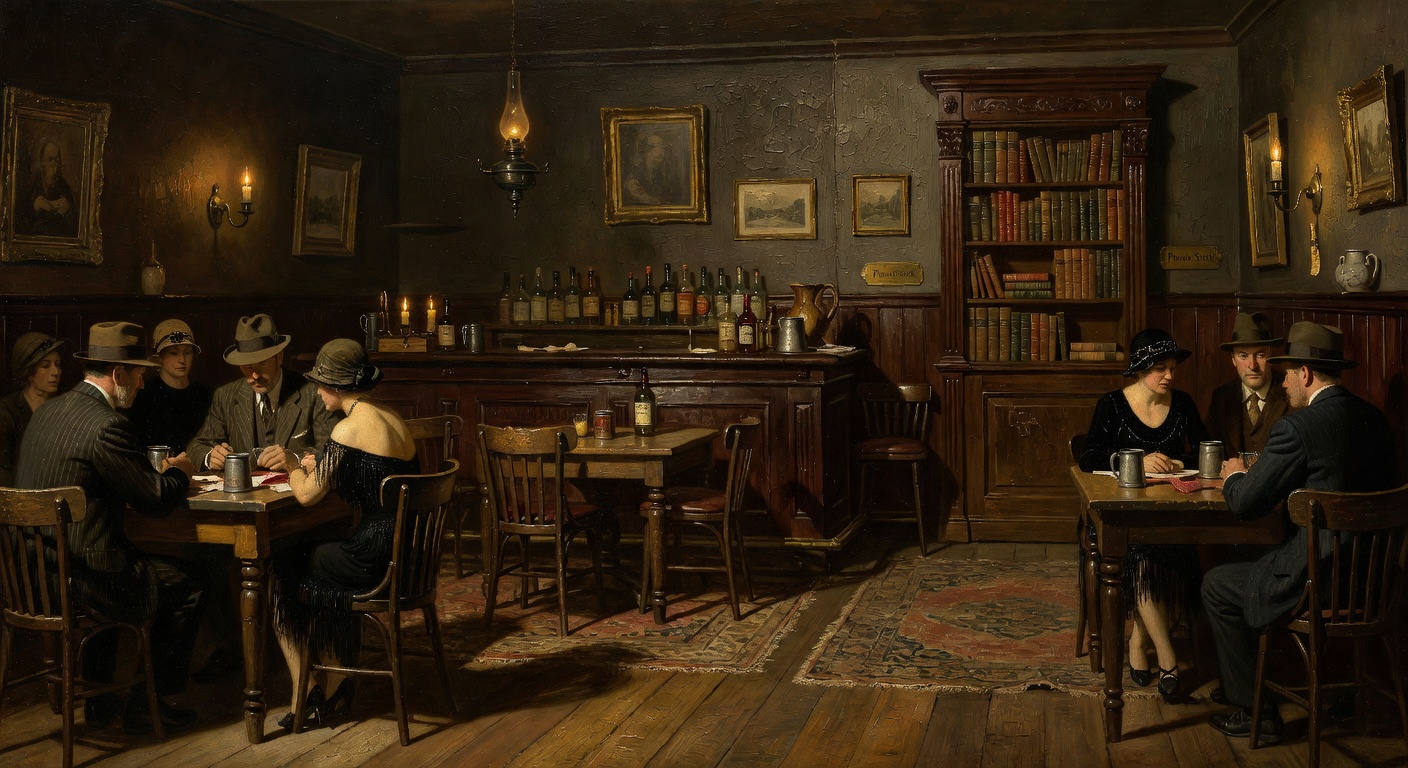
See, the thing about Prohibition is nobody really talks about the gambling side of it. Everyone is on about the hooch, the bathtub gin, the speakeasies. Fair enough, that is where the real money was. But here is what I know from the old boys who were in it: when you ban one thing and people want it anyway, you do not kill the market, you just push it further underground and make it rougher.
America 1920 to 1933
America, 1920 to 1933. Alcohol banned. But what do you think happened to a gin mill that used to have card tables in the back? It did not close. It got darker. The girls who took bets on fights, the guys running craps games in basements, they were already operating outside the law because booze was illegal. Adding gambling was not a big step. It was already risky territory.
The cities where this really took hold were the ones with existing gambling traditions. New York had a massive numbers racket by the 1920s. Chicago was always a wide-open town, and Capone and his lot ran gambling and liquor together, one operation. You cannot separate them. A speakeasy without gambling was leaving money on the table. A numbers game without booze to sell was not pulling in the customers.
Here is the problem the feds faced, and this is the bit that is worth understanding. You cannot actually shut down a market that is driven by demand. You can make it illegal, arrest the operators, seize the joint, but the players do not disappear. They just find another cellar, another back room. By 1925, estimates had it that there were more illegal casinos in New York City than there had been legal gambling operations before Prohibition. More. Not fewer. The law created the exact thing it was supposed to prevent.
The money involved was staggering. A decent basement craps game in Manhattan might see twenty grand a night during Prohibition. Twenty grand. That is 1920s money, real money. The police were on the take, obviously. You pay a sergeant to look the other way, you are golden for six months until the precinct gets rotated or someone gets ambitious. The whole system was built on corruption, but the corruption already existed. Gambling just became another item on the menu.
Now, the difference between a legal casino and an illegal one is not philosophy. It is rules. A legal casino has regulations. House edge is transparent. You know what you are getting. An illegal game? Odds are whatever the house decides they are. I worked plenty of corners where the real game was separating the mug from his money, full stop. Mark is supposed to be playing blackjack at 0.5 percent house edge. In reality, the dealer is working with a partner, the cut has been shaved, and the deck is arranged. The mark is going to lose 15, 20 percent if he is lucky. That is the illegal economy.
The government tried everything. Cops raiding. Feds going after the big operators. But the speed of adaptation was something else. You close one room, two open up somewhere else. You arrest the proprietor, his brother-in-law takes over. The players had nowhere else to go. Where else were they supposed to gamble? Atlantic City had some legal operations, but New York? That was all underground.
The Irish, the Italians, the Jewish crews all had fingers in it. Meyer Lansky was making a fortune running numbers and gambling operations in New York while Prohibition was in effect. Everyone knows about his connection to the casinos later, but his base of operations, his education in the business, came from the illegal economy of the 1920s. You could not have created the structure of Las Vegas and Atlantic City without the guys who had learned their trade in speakeasies and basement games.
Repeal came in 1933, and suddenly the equation changed. Alcohol was legal again. The speakeasies died off. But the gambling operations? They did not go away. They just went deeper underground. Some migrated. Guys headed to Florida, to hot springs, to anywhere there was money and lax oversight. The infrastructure that Prohibition built stuck around for decades. The culture of underground gaming never quite died, even after legalization became possible.
The lesson, if you want one, is simple: prohibition does not stop games; it creates them, just the illegal kind. When you ban gambling outright, you do not eliminate it. You eliminate the regulation. You kill the oversight. You hand the whole thing to the criminals and the corrupted cops. Better a legal game on the level than an illegal game with shaved decks and rigged odds. That is what Prohibition taught anyone who was paying attention.
Wings for this entry