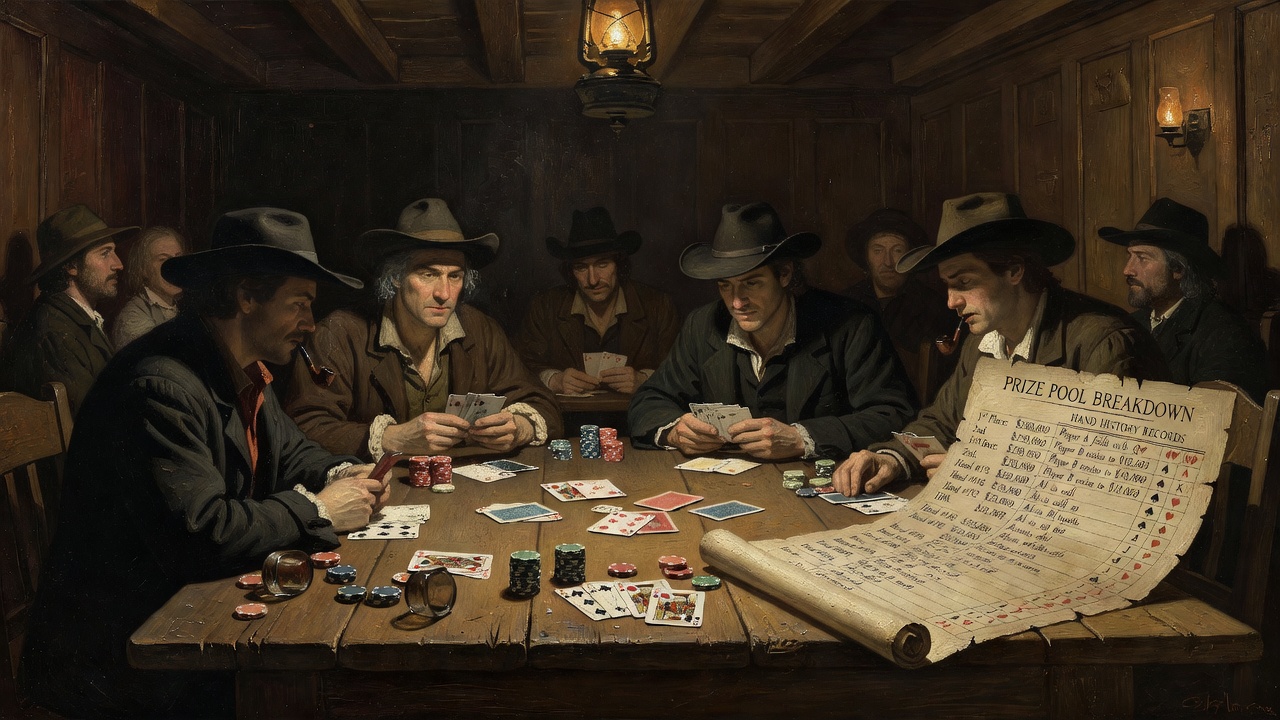
Underground poker rooms in the 1990s ran in apartment buildings in Los Angeles. The rooms were accessed through unmarked doors. The games were high-stakes, no-limit Hold'em. The players were often local businessmen, a few celebrities, and a small number of professional gamblers. Barry Greenstein appeared in these rooms in the mid-1990s and began to play poker with the focus of someone studying a language.
Greenstein had worked as a computer engineer at JPL (Jet Propulsion Laboratory) before becoming a full-time poker player. He had a specific mindset: systems thinking, pattern recognition, and the ability to remain emotionally detached while other players were emotionally invested. He played in the underground games in Los Angeles, then moved to Las Vegas, then traveled to other cities to play in high-stakes games. Over 15 years, he accumulated approximately $30 million in poker earnings.
What made Greenstein unusual was not his skill. Several poker players had accumulated similar wealth. What made him unusual was his response to that wealth. In 2005, Greenstein announced that he was donating most of his poker winnings to charity. He founded his own charitable organization focused on African development and malaria prevention. By 2010, he had donated approximately $25 million.
This was shocking to the poker community because wealth accumulation was the explicit goal of high-stakes poker. The idea was to win as much as possible and keep as much as possible. Greenstein had won as much as possible and given most of it away. Other players did not understand the logic.
The Underground Ethic
In the underground poker rooms of the 1990s, there was an unspoken ethic about who belonged and who did not. You had to be willing to play for large stakes. You had to be willing to lose without complaint. You had to maintain discretion about the location and the players. Greenstein fit this profile. He was quiet, focused, and serious about the game.
The rooms operated outside legal structure because Las Vegas casinos had a monopoly on legal gambling in Nevada until the early 2000s. The underground games were not technically legal, but they existed in a space where law enforcement decided not to enforce. The players understood they were in a gray area and accepted it. Greenstein accepted it without question.
What made Greenstein distinctive as a player was his approach to bankroll management and risk. He did not try to win the most money possible in each session. He tried to win with the highest edge possible, betting the minimum necessary to secure the edge. This meant he lost less when he was wrong and won less when he was right, but over time, he accumulated wealth more consistently than flashier players.
His donations came from a specific ethical framework. Greenstein believed that his wealth was a consequence of luck and opportunity, not merit. The luck was being born into a family with resources that allowed him to learn poker. The opportunity was the existence of high-stakes games where he could apply that skill. The difference between him and a homeless person was not moral superiority. It was chance.
Other poker players found this reasoning strange. Poker culture rewards competition and accumulation. The idea that luck, rather than skill, was the decisive factor went against the entire mythology of poker. But Greenstein was careful to distinguish between skill (which was real) and circumstance (which was also real). He believed his skill entitled him to the money he had won. He did not believe circumstance entitled him to keep it.
Greenstein played poker for 20 years and was generally regarded as one of the best players in the world during his peak. He won major tournaments, including the WSOP mixed events (where players must master multiple poker variants). He wrote a book on poker philosophy that emphasized discipline and emotional control. His impact on poker strategy was significant.
But his impact on poker culture was more significant. By removing the assumption that the goal of poker is wealth accumulation, Greenstein changed what poker meant. Poker was not about becoming rich. It was about testing yourself against other skilled players in a game of incomplete information and psychological warfare. The money was the measure of success, but it was not the point.
Greenstein still plays occasionally but is semi-retired from high-stakes poker. His donations have saved lives through malaria prevention programs in Africa. He is regarded by other poker players with respect and, by some, with confusion. The idea that a person could reach the peak of poker and decide that wealth was not the goal is difficult for the culture to process. But Greenstein did it, consistently, for 20 years. He is the only player in poker history who made winning seem less important than why he was winning. That distinction has made him a figure of quiet controversy in a game that usually reserves controversy for drama.
Wings for this entry