You have Bitcoin. You want to gamble with it. You face a choice: let the casino keep your money, or keep it yourself. This is the custodial versus non-custodial question. One is convenient. One provides safety. Both extract costs.
The Two Wallet Models Explained
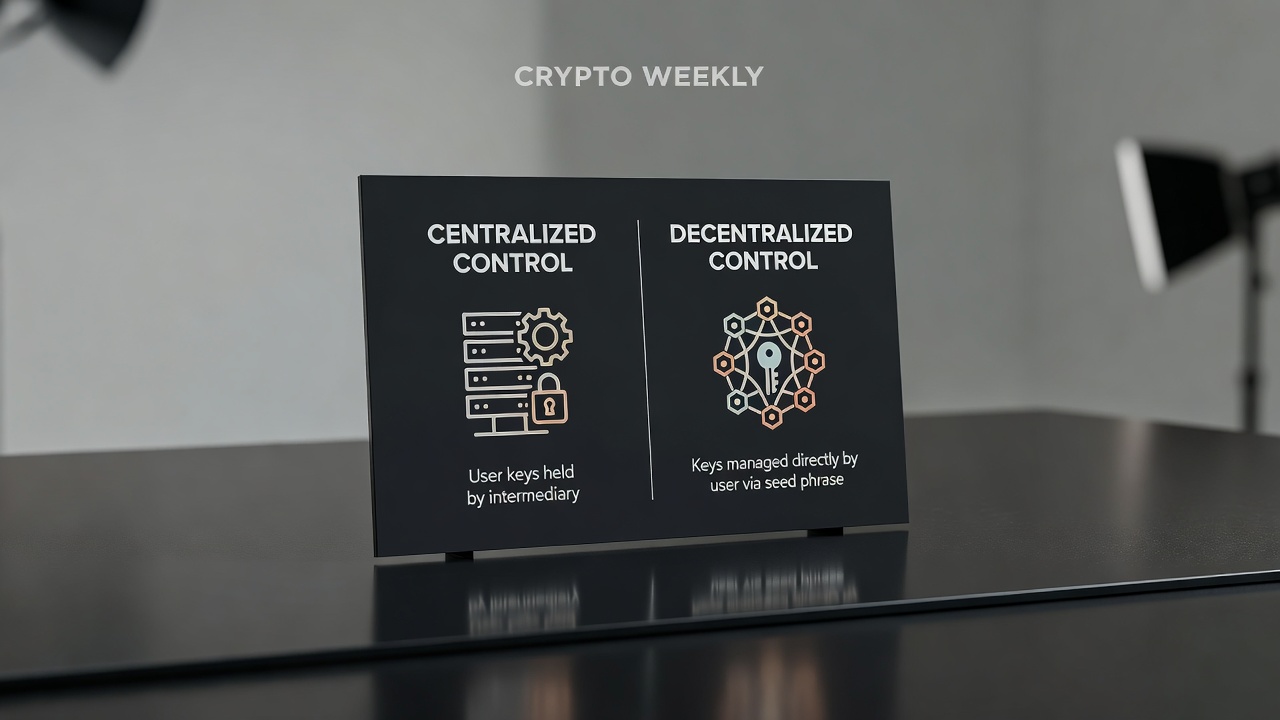
A custodial wallet is one where the casino controls your private keys. You sign in with credentials. The casino safeguards the actual Bitcoin in a vault. When you want to withdraw, you submit a request. The operator processes it. This mimics how traditional casinos function, except the asset is Bitcoin rather than dollars.
A non-custodial wallet is one where you possess the private keys. The casino cannot freeze, move, or prevent you from accessing your coins. You are the bank. This represents the Bitcoin ideal: total sovereignty. You are the one in charge.
Custodial wallets deliver speed and ease. You deposit, you play, you pull money out. No waiting for blockchain confirmations. No managing private keys. The trade-off is faith: you are entrusting the casino with your coins. If the casino suffers a hack, your Bitcoin vanishes. If the casino disappears, your Bitcoin disappears. Mt. Gox taught this harsh lesson in 2014.
Non-custodial wallets require you to handle private keys. If you misplace the key, you lose the Bitcoin. If malware steals the key, you lose the Bitcoin. The blockchain verifies every transaction, but verification consumes time. Pulling money from a non-custodial wallet may take 10 minutes instead of instant.
The security comparison defies simplicity. Custodial wallets become targets for attackers since they accumulate large amounts of Bitcoin. Non-custodial wallets shift the security burden onto you. If you are sloppy with keys, custodial is more secure. If you are methodical, non-custodial is more secure. This is not a neutral calculation.
The financial expense differs. Custodial wallets may cost you nothing for deposits and withdrawals because they dominate the Bitcoin flow. Non-custodial wallets require you to pay blockchain charges for every deposit and withdrawal, typically 10-50 dollars per transaction depending on network congestion. Across a year of playing, this compounds.
Tax ramifications diverge. A custodial wallet functions as an account. Winnings and losses are connected to your identity. A non-custodial wallet stays pseudonymous at the blockchain level, though your gaming activity remains identified by your KYC verification at the casino. The tax agencies in most nations treat crypto gambling the same whether custodial or non-custodial. Neither provides anonymity from tax authorities.
Access to funds differs as well. In custodial wallets, you may wager, cash out to the casino wallet, and wager again instantly since the operator is the counterparty. In non-custodial, you transfer from your external wallet, play, and must convert back to external Bitcoin. This entails you paying blockchain costs on entry and exit, and you delay for confirmation on each.
Managed custody is a third option. Certain platforms like Kraken or Coinbase supply custodial accounts with guarantees. Your Bitcoin gets held by a regulated entity with insurance safeguards. It does not achieve the ease of a casino custodial wallet, yet it stays safer than a casino since the organization's primary business is not gaming; it is storage.
For most casual crypto players, custodial wallets are the right answer. You reduce technical burden. You tolerate the operator risk in exchange for ease. If the operator is large and overseen (Stake, Cloudbet), this risk stays acceptable.
For players shifting significant sums, non-custodial wallets merit consideration. You absorb the blockchain costs. You manage the keys. You prevent the casino from restricting your account. You additionally forfeit the casino's assistance if you misplace your keys.
The silent truth: most operators favor custodial wallets because they retain the Bitcoin on-premises and may lend it, put it to work, or deploy it as operating funds. That is why custodial wallets frequently offer superior odds, rakeback, or sign-up payouts. The operator is compensating you for the privilege of storing your money.
Decide based on what you prioritize. Speed and incentive programs? Custodial. Authority and security? Non-custodial. Neither is universally right.
Wings for this entry