In this entry8 parts
The question that keeps coming up from friends who still think the online casino is a novelty is whether their money is safe on the wire. My answer, which I will defend with the dates and the names, is: it is safer than it was in 1996, safer than it was in 2006, and safer than it was in 2016. The whole history of licensed online casino payments has been a steady accumulation of guardrails. Most of them got built after something bad happened. Which is how every interesting piece of industry infrastructure gets built.
Here is how it happened, in order.
1994-1996: The Protocols That Made It Possible
Before anyone took a wager online, the payment protocols had to exist. Secure Sockets Layer, version 2.0, was published by Netscape in 1995. The first online casino launch I credit as meaningfully licensed was InterCasino, out of Antigua, in August 1996. They took credit card deposits over SSL. Primitive by modern standards, but the basic encryption of the card-in-transit step was there from day one of the industry.
The first generation of online payments was straight credit card. No tokenisation. No three-domain secure. The card number went into a form field on the operator's website, the form submitted to a payment gateway, the gateway authorised through the issuer, the money moved. The card number, once entered, was stored on the operator's server, hashed or encrypted depending on the operator's sophistication. Which varied.
1998-2001: The E-Wallet Arrives
Moneybookers was founded in the UK in 2001. NETeller launched in Canada in 1999. These two products were the first purpose-built e-wallets for online gambling deposits. They offered a meaningful security gain: the player's credit card lived at the e-wallet, not at every casino, and the casino received funds from the e-wallet without seeing the card.
This was a big step. The operator's database, which was often the weak link, no longer had the card number in it. A breach at the operator, if it happened, exposed the e-wallet account identifier but not the underlying funding source.
PayPal, notably, stayed out of the gambling category during this period. That left the gambling-specialist wallets as the category leaders.
2006: The UIGEA and the Restructuring
October 13, 2006. The Unlawful Internet Gambling Enforcement Act, tucked into the Safe Port Act, passed in the US Congress. The law restricted US financial institutions from processing payments to and from online gambling operators. NETeller's US-facing business collapsed within weeks. Its executives, Stephen Lawrence and John Lefebvre, were arrested in January 2007.
The security-relevant consequence was that the whole payments stack for US-facing operators had to be rebuilt using workarounds: prepaid vouchers, offshore bank transfers, and eventually, years later, cryptocurrency. The rebuild left a patchwork of less-regulated, less-audited rails that persisted in the grey market until the 2011-2013 state-by-state legalisation wave began to regularise things again.
2009-2012: The PCI DSS Era
The Payment Card Industry Data Security Standard (PCI DSS) had been introduced in 2004. By the late 2000s, compliance with PCI DSS was a contractual requirement from the card networks for any merchant accepting card-not-present transactions. Online casinos fell into the highest-risk merchant category and were audited accordingly.
The PCI DSS audit regime forced operators to segregate card data, encrypt it at rest, tokenise it where possible, and minimise the scope of systems that touched it. An operator found non-compliant could have its merchant account pulled, which meant no card deposits, which meant no business. The enforcement mechanism was brutal and effective.
By 2012, any licensed operator accepting card deposits was operating within a PCI DSS compliant stack. That was not true in 2002. That is the difference a decade of contractual enforcement makes.
2015-2018: PSD2 and Strong Customer Authentication
The European Union's Revised Payment Services Directive (PSD2) was adopted in 2015 and came into force in phases through 2018 and 2019. The key security element for the gambling industry was Strong Customer Authentication (SCA): any electronic payment over 30 euros, in most contexts, now requires two of three factors (knowledge, possession, inherence) at the moment of authorisation.
For the online casino player, SCA introduced the two-factor step that is now standard: the card deposit triggers a push notification to the banking app, the player approves with a biometric, the deposit lands. A card-not-present fraud attempt against a deposit now has to get past the biometric on the player's own phone, not just the card details.
SCA was resisted by some operators on the grounds that it added friction to the deposit flow. It did. It also reduced card-not-present fraud losses across the European payments system by a documented margin, published annually by the European Central Bank.
2018-2022: Tokenised Wallets and the Phone
Apple Pay, launched in 2014, and Google Pay, launched in 2015, took tokenisation to the consumer device. The card number is never passed to the merchant. A device-specific token, cryptographically tied to the physical device and the biometric authorisation on that device, is passed instead. A breach at the operator now exposes neither the card number nor the e-wallet identifier, but only a device token that is useless without the originating device.
This architecture is, as of 2026, the strongest consumer payment security available at scale. Most licensed online casinos accept Apple Pay and Google Pay as deposit methods. The player who uses them is operating at the maximum standard of payment security the current infrastructure offers.
2020-2026: Crypto, KYC, and the AML Layer
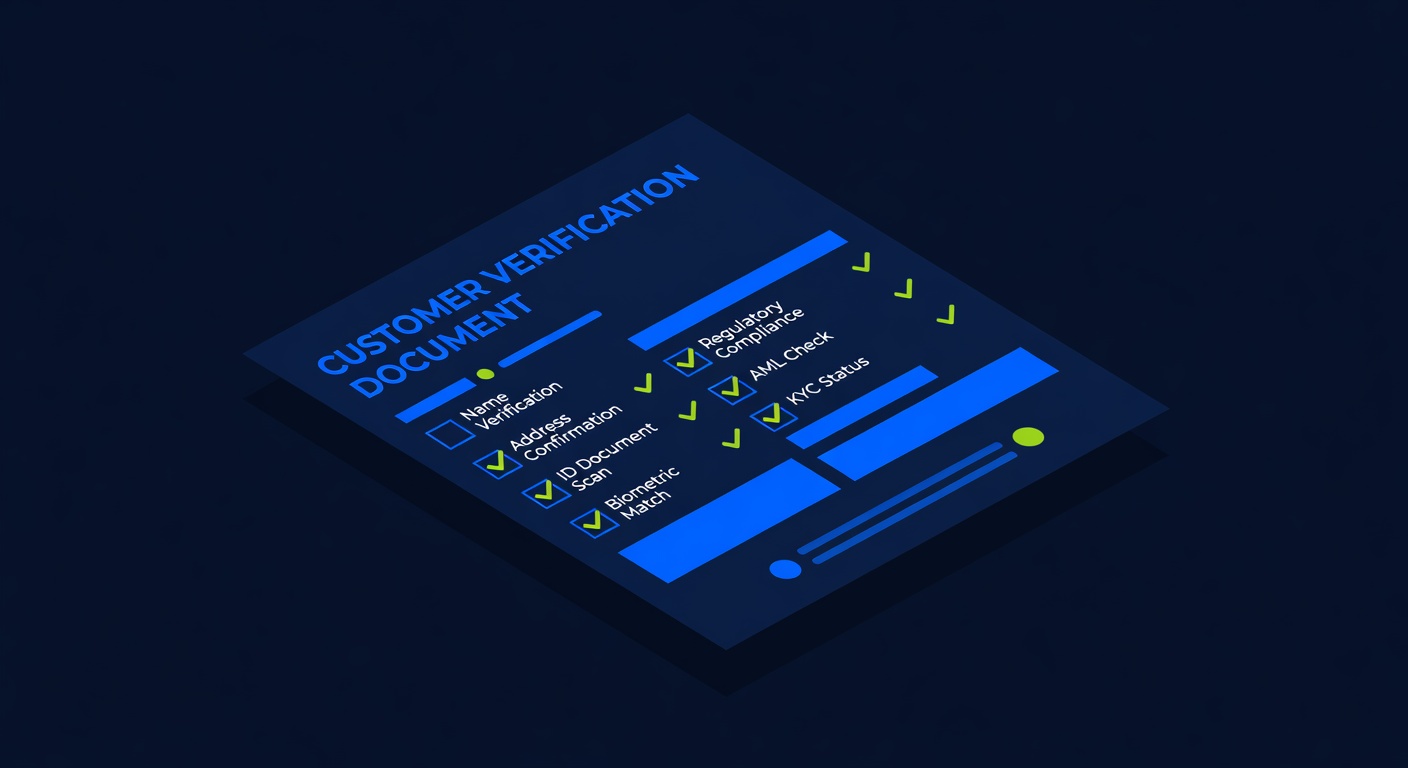
In parallel with the mainstream card-and-wallet track, the crypto track matured. By 2020, most licensed crypto-accepting casinos had implemented on-chain AML screening (Chainalysis, Elliptic) to block deposits from sanctioned or high-risk wallets. The KYC layer, required by licensing in most jurisdictions, was bolted on top of the crypto rail rather than replacing it.
This hybrid (crypto for the payment, KYC for the identity, AML screening for the risk layer) has become the 2020s architecture for the crypto-friendly licensed operator. It is more work than the pure card-and-wallet stack. It also opens payment channels to players who cannot or will not use cards for gambling deposits.
Where We Are
In 2026, a player depositing at a licensed online casino in a functional jurisdiction is operating on one of three tracks: a PCI-compliant card deposit with SCA, a tokenised wallet deposit with biometric authentication, or a KYC-wrapped crypto deposit with AML screening. All three are more secure than the 1996 InterCasino deposit flow by orders of magnitude. None of them are perfect. The fraud vectors still exist, mostly at the account takeover and social engineering layer rather than the payment rail layer, but the baseline is vastly improved.
The industry got here by getting burned: by UIGEA, by the early breaches, by the PSD2 enforcement actions, by a few cryptocurrency rug-pulls. Every scar produced a guardrail. The guardrails accumulated. That is how the whole thing works, and why the player who walks into a licensed online casino in 2026 is, on the payments side, probably as safe as they can be.
The unlicensed operators are a different story, which I will save for another night.
Wings for this entry