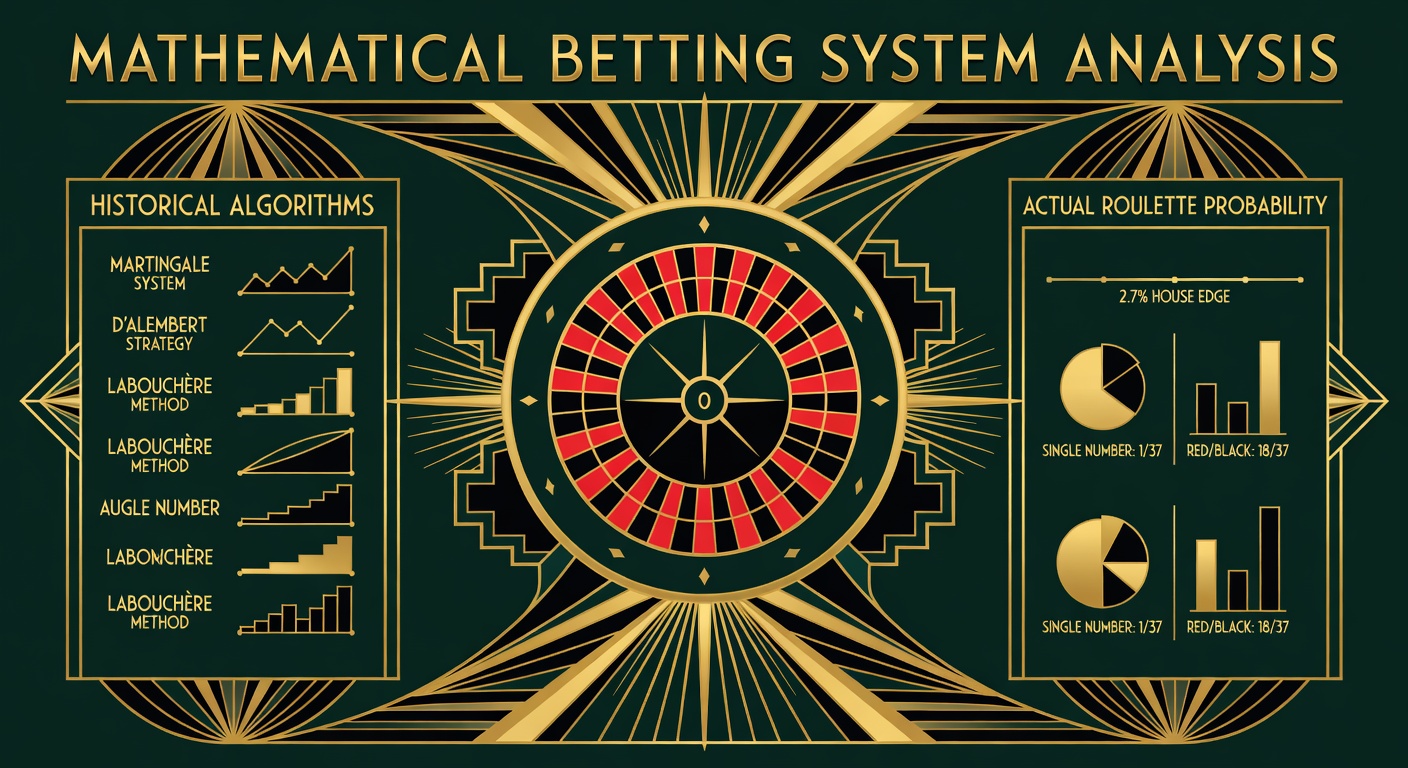
The D'Alembert system says this: when you lose, increase your bet by one unit. When you win, decrease it by one unit. Start with 10 units on red. You lose: bet 11 units next. You lose again: bet 12 units. You win: bet 11 units. You win again: bet 10 units. The idea is that losses and wins should equilibrate, and when they do, you will be at unit one and start over.
Mathematically, this is garbage. Roulette has a fixed house edge of 2.7 percent (European wheel) or 5.26 percent (American wheel). No bet-sizing system changes this. The D'Alembert system does not change the edge. It changes the variance of your outcomes, which sounds good until you realize it increases your risk of ruin. When you hit a losing streak (which happens), you are betting larger amounts against a fixed edge. You will blow through your bankroll faster.
The Fibonacci system is subtly different. The Fibonacci sequence is 1, 1, 2, 3, 5, 8, 13, 21, 34... Each number is the sum of the two preceding numbers. You start at one unit. Lose: move to the next number (1). Lose: move to the next (2). Lose: move to the next (3). Win: go back two steps in the sequence. The promise is that you end up at +1 unit profit when the sequence resolves.
On paper, this works. If you lose five in a row (1, 1, 2, 3, 5), then win three times and navigate back two steps per win, you will end with a profit. The problem is the same as D'Alembert: you have to survive to the end. A 10-spin losing streak in Fibonacci sequence betting looks like 1, 1, 2, 3, 5, 8, 13, 21, 34, 55. Your 10th bet is 55 units. If your bankroll is 200 units, you cannot actually place that bet. The system fails before mathematics can save you.
Why This Matters
These systems circulate because they address a real human desire: the desire to believe that structure creates advantage. Roulette is random. No amount of structure beats randomness. But both systems create the appearance of structure. They give you a algorithm to follow. They create hope because they almost work. In a short sample, you might win 52 percent of bets and have the system climb back down to base units at a profit.
But sample size matters. In 1,000 spins, the math catches you. The sequence gets long. The bets get large. You either hit a break in the sequence that resets you, or you blow through bankroll trying to reach the end.
Footnote: The Fibonacci system has a technical advantage over D'Alembert because win-probability is not 50/50 on even-money roulette bets. The house edge means you lose slightly more often. Fibonacci requires you to be ahead before the sequence resets, which is harder than D'Alembert requires. But this is a distinction between two methods that both do not work. It is like asking whether you prefer a broken clock that is two minutes slow or three minutes slow. Neither tells time.
The casino's advantage is that they can afford to wait for statistics to work. You cannot. You have finite bankroll and finite time. The system has infinite time and makes money on every spin from the edge. Over a large sample, you will lose money to the house edge. The system cannot overcome it.
Wings for this entry