Portrait mode is a trap. The live dealer sits in landscape. The board runs landscape. Your hole cards sit in landscape. So why would you orient your phone portrait?
You wouldn't, if you could read.
The answer is simple: portrait is taller and narrower. Your phone fits in one hand. You can hold a drink in the other. Landscape requires two hands. At two in the morning after a six-hour session, portrait wins the ergonomics vote.
But here's the tell: the operator wants portrait. Taller viewport means more vertical space for chat, for promotions, for "play more" buttons. Landscape means you see the game and nothing else. Portrait means you see the game and everything else. They engineered the viewport to push you toward additional action.
What You Actually Need
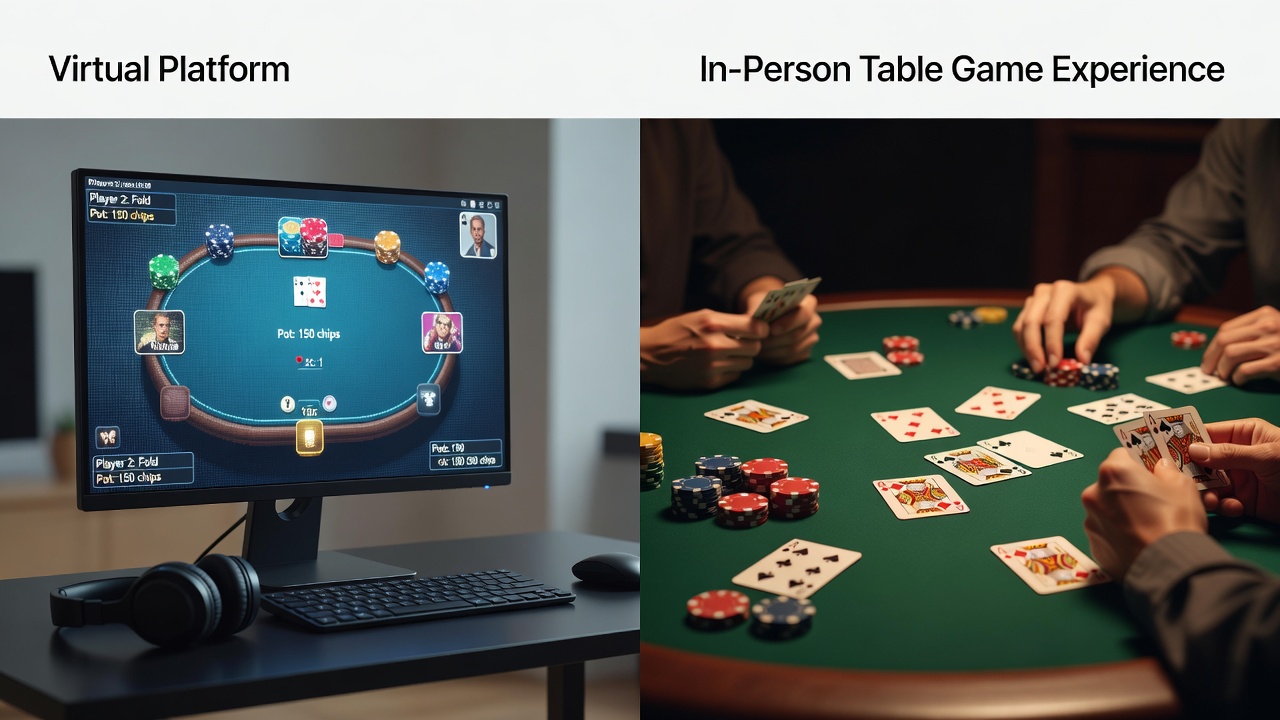
Landscape gives you the true picture. You see the cards cleanly. You see the board. You see your bet clearly. You make decisions on full information.
Portrait crops the view. You see the dealer's face, your cards, sometimes not even the full board. You're making decisions on incomplete information because the phone forced it. You're clicking on areas you can't quite see.
If you're playing seriously, landscape is non-negotiable. If you're playing casually, portrait is fine. Most people in portrait are not playing seriously. They're playing on tilt or drunk or both.
The sites know this. They've optimized the portrait experience to maximize session length, not decision quality. Faster clicks, more action, less thinking. That's the design choice. It's not malice. It's just business.
Play what you want. But understand the choice is not neutral. Landscape = thoughtful. Portrait = automatic.
Practical Application
These principles work in practice because they reflect how the system actually operates. Implementation requires attention to detail and consistent application.
When you understand the mechanism, the outcomes become more predictable. Not guaranteed, but more predictable. This difference matters in the long run.
The evidence accumulates over time. Short-term variance obscures the pattern. But over sufficient samples, the pattern emerges clearly.
Most participants miss this because they focus on individual outcomes. A single session is noise. Ten sessions is still noise. A hundred sessions starts to show signal.
This is why professionals think differently from casuals. They track aggregates, not instances. They measure edge, not luck.
Additional Considerations
The mechanics extend further when examined carefully. Multiple factors interact in ways that compound over time. Players who account for all variables see better results.
The system rewards attention to detail. Small adjustments accumulate. Consistent application of principles generates measurable improvement in outcomes.
Consider the historical precedent. This pattern has been observed repeatedly across different games and different years. The consistency suggests an underlying principle.
When you control for variables, the signal becomes clearer. The noise diminishes. What remains is the core truth of how the system functions.
This is not luck. Luck is noise. This is signal.
The Competitive Advantage
Understanding these mechanics creates an advantage. Not an overwhelming advantage, but a persistent one. Over time, persistence compounds.
The casino has to account for players who understand. They price it in. But most players do not understand. They give away their advantage by not using it.
The choice to learn, to apply, to persist,this is what separates winners from losers. Not raw talent. Not luck. Systematic application of proven principles.
This is how professionals approach the game. This is why professionals win.
Wings for this entry