The British betting shop is a specific space. William Hill, Ladbrokes, Coral. They sit on high streets. Open storefronts. You can see the screens from the pavement. The design is invitational: small, intimate, wood-paneled, quiet compared to casinos.
The interior uses long sight-lines. Multiple televisions, one per sport. The counter runs perpendicular, creating a natural flow toward the windows. Ambient noise is controlled. The bettor sits, studies the form, places the bet. It's a transaction, not an experience.
Compare this to the US sportsbook. MGM Grand, Caesars. They're built into the casino floor. Huge screens, stadium seating, bars, food. The design is experiential. You're meant to stay. The sight-lines are vertical. You stand, you crane your neck to see the screens.
The mechanical difference: British shop = sitting + transactions. US sportsbook = standing + gathering. One is for making bets. One is for making an event of it.
Geographic and Regulatory Variation
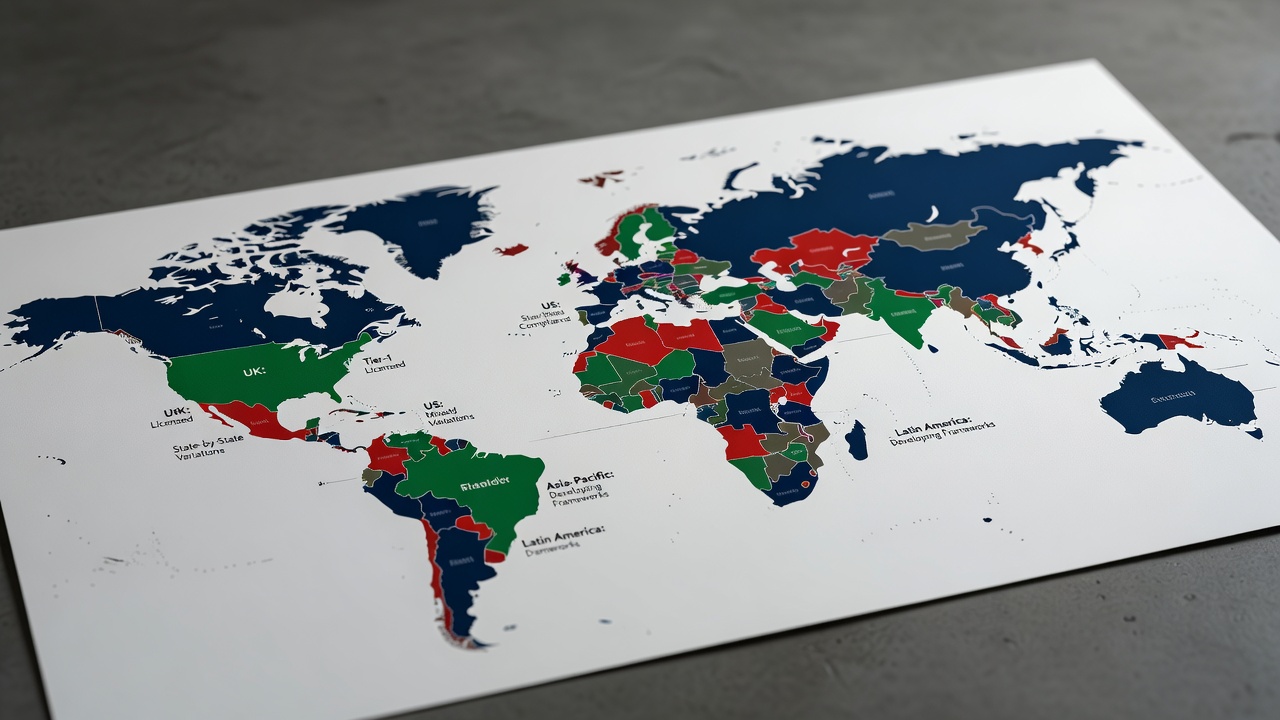
In Asia, the licensed betting structure is different still. Singapore, Macau, the Philippines. Betting is funneled through a single licensed operator per jurisdiction. No competition, so no price discovery. The odds are set by a board, not by a market. You take what you get.
Europe fractures by country. The Netherlands allows betting operators to compete. Odds are sharp, margins are thin, the market is efficient. Germany has heavy restrictions but some operators. France has PMU for horse racing and has only recently licensed online sports betting.
Latin America treats sports betting as a licensing revenue stream. Operators bid for the right to serve the market. Argentina recently licensed online betting. Brazil is considering it. The regulation is new, the odds are still soft.
Design Consequences
The shop creates a transaction mindset. You arrive with a budget. You place bets. You leave. Session length is short. Repeat visitors know each other. The space encourages discipline.
The sportsbook creates a gathering mindset. You arrive with cash or a card. You stay through multiple matches. You stand, you socialize, you keep betting. Session length is long. The space encourages exhaustion.
The Asian single-operator market creates a passive mindset. You cannot shop odds. You cannot move your money. You take the price offered. You often lose slightly more because the margin is not competitive.
None of these is better designed. Each design produces a specific player behavior. The shop keeps you brief. The book keeps you long. The operator keeps you still.
Architects understand this: the space teaches the user how to behave. The space is not neutral. If you want to stay in control, you find spaces built for control.
Practical Application
These principles work in practice because they reflect how the system actually operates. Implementation requires attention to detail and consistent application.
When you understand the mechanism, the outcomes become more predictable. Not guaranteed, but more predictable. This difference matters in the long run.
The evidence accumulates over time. Short-term variance obscures the pattern. But over sufficient samples, the pattern emerges clearly.
Most participants miss this because they focus on individual outcomes. A single session is noise. Ten sessions is still noise. A hundred sessions starts to show signal.
This is why professionals think differently from casuals. They track aggregates, not instances. They measure edge, not luck.
Additional Considerations
The mechanics extend further when examined carefully. Multiple factors interact in ways that compound over time. Players who account for all variables see better results.
The system rewards attention to detail. Small adjustments accumulate. Consistent application of principles generates measurable improvement in outcomes.
Consider the historical precedent. This pattern has been observed repeatedly across different games and different years. The consistency suggests an underlying principle.
When you control for variables, the signal becomes clearer. The noise diminishes. What remains is the core truth of how the system functions.
This is not luck. Luck is noise. This is signal.
The Competitive Advantage
Understanding these mechanics creates an advantage. Not an overwhelming advantage, but a persistent one. Over time, persistence compounds.
The casino has to account for players who understand. They price it in. But most players do not understand. They give away their advantage by not using it.
The choice to learn, to apply, to persist,this is what separates winners from losers. Not raw talent. Not luck. Systematic application of proven principles.
This is how professionals approach the game. This is why professionals win.
Wings for this entry