A blocker is a card that changes the probability calculation for your opponent's hand. It's the central mechanism in poker decision-making, and it's why poker functions as a system of imperfect information.
Here's how it works: you hold the Ace and King of spades. Your opponent is evaluating whether to call your wager. From your opponent's vantage, the likelihood that you possess an Ace has diminished. You own one of the four Aces remaining in the deck. That card sits in your palm, unavailable for your opponent to capture. This card, from your opponent's perspective, functions as a blocker. It denies them the Ace.
Let's build this from foundational principles.
The Blocker as a Retention Hook
In game design, a retention hook motivates continued engagement. In poker, blockers serve as retention hooks by creating information asymmetry. Your opponent understands nothing about your cards. You see everything about yours. You can weaponize this asymmetry to manipulate pot odds.
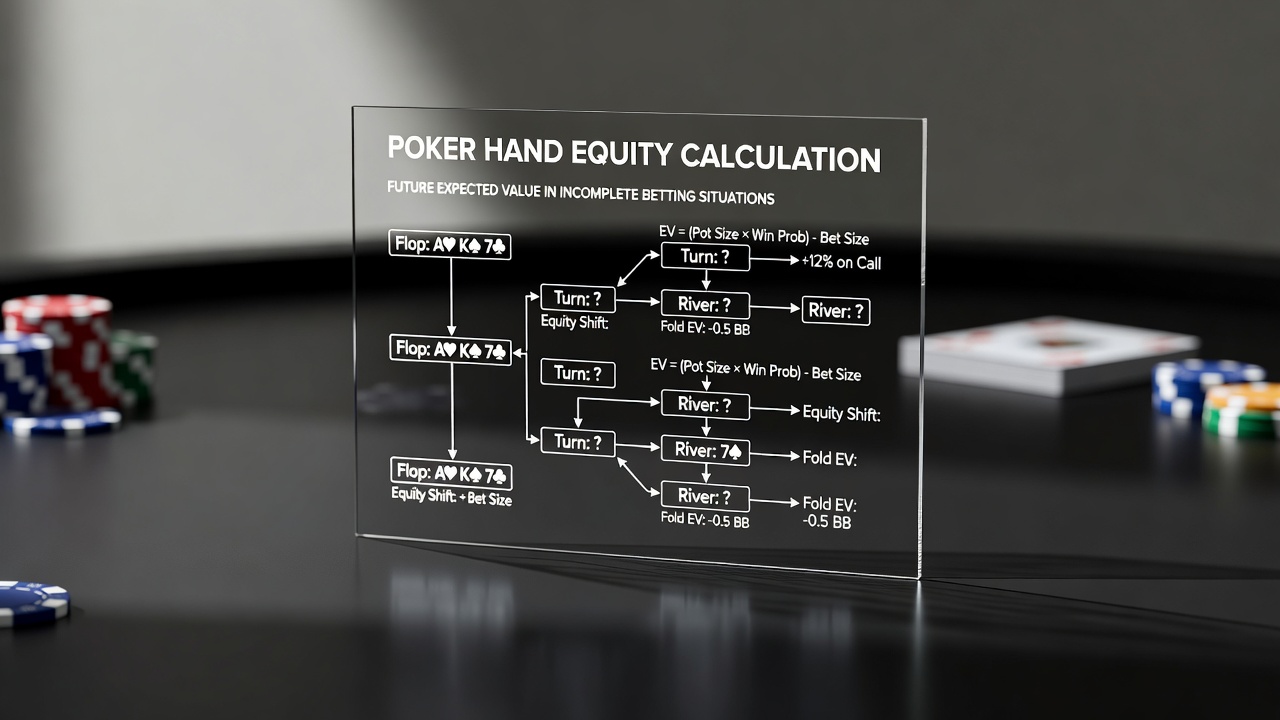
Consider a scenario: the board displays 6-7-8 of hearts, and you hold Ace-King of hearts. You possess the strongest possible flush draw. Yet your opponent might hold pocket twos or an established straight. Standard math assigns you roughly 36% equity (you prevail approximately 36% of all-in scenarios). However, you also carry two removal cards: an Ace and King that eliminate possibilities from your opponent's range.
Specifically, your Ace removes Ace-containing hands from what your opponent might play. This contracts their feasible holdings. The advantage is clear: by owning cards that eliminate your opponent's premium holdings, you've enhanced your equity position.
The Design of Bluff Stability
When you bluff, blockers shape the bluff's effectiveness. Picture yourself bluffing the river with 3-2 offsuit. Your 3 and 2 eliminate nothing. Your opponent's possible hands remain untouched by your holdings. If your opponent infers you're bluffing from community information alone (the board plus action), they'll call. Blockers offered zero protection.
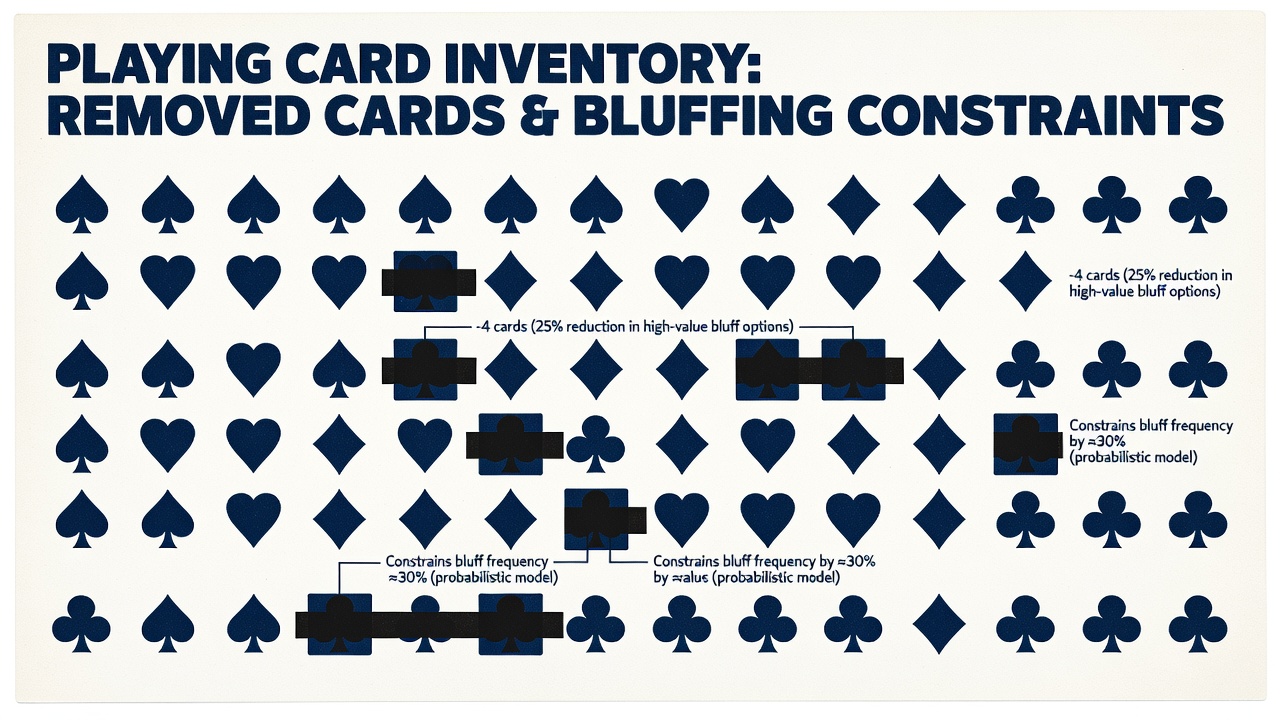
Contrast this with bluffing while holding Ace-King. Your Ace eliminates one-quarter of the three-bet ranges your opponent could possess. Your King removes additional combinations. This depletion shrinks your opponent's strongest holdings, decreasing their likelihood of calling. Your blockers have enhanced your bluff's success rate.
- Ace blockers dominate: they eliminate the nut hand (Ace-high) and diminish strong-hand frequency by 18-25%
- King blockers rate as moderately effective: they eliminate secondary-tier holdings
- Queen blockers and weaker removal cards provide modest but meaningful equity shifts
The design principle underlying all this is rewarding strategic information use. If you recognize which cards eliminate your opponent's holdings, you obtain an advantage in deciding whether to bluff or fold. Seasoned professionals dedicate years mastering which texture types and hand ranges interact with which removal cards. This signals genuine skill.
The Feedback on Bluffing Decisions
Blockers generate important feedback loops. If you execute a blocker-heavy bluff and it fails, you receive a signal: blockers guarantee nothing. They improve odds. The retention hook lies in motivating additional hands because calculations shift with each deal. You're no longer computing just hand strength. You're calculating which alternatives remain accessible to your opponent given your holdings.
This explains why skilled players analyze identical holdings completely differently depending on seat position. A 3-2 offsuit holding an Ace removal works as a bluffing tool in ways that 3-2 with zero removals cannot match. The game structure punishes those ignoring blockers while rewarding those who integrate them. That dynamic keeps talented players engaged.