Marcus had been sitting at the Venetian's table 22 for six hours when his stack began to dwindle. Not from dramatic coolers or bad beats. From antes, blinds, and the grinding mathematics of a game demanding constant choices. He had bought in for 300 dollars. He was down to 47.
The table was running hot. Eight players circled the felt, and most had been profitable. Money flowed predictably: the aggressive Scottsdale regular accumulated racks. The retiree from San Francisco watched his shrink with each round. Two UNLV undergrads played cautiously, hunting premium holdings. Marcus held the shortest stack, and the burden weighed on him.
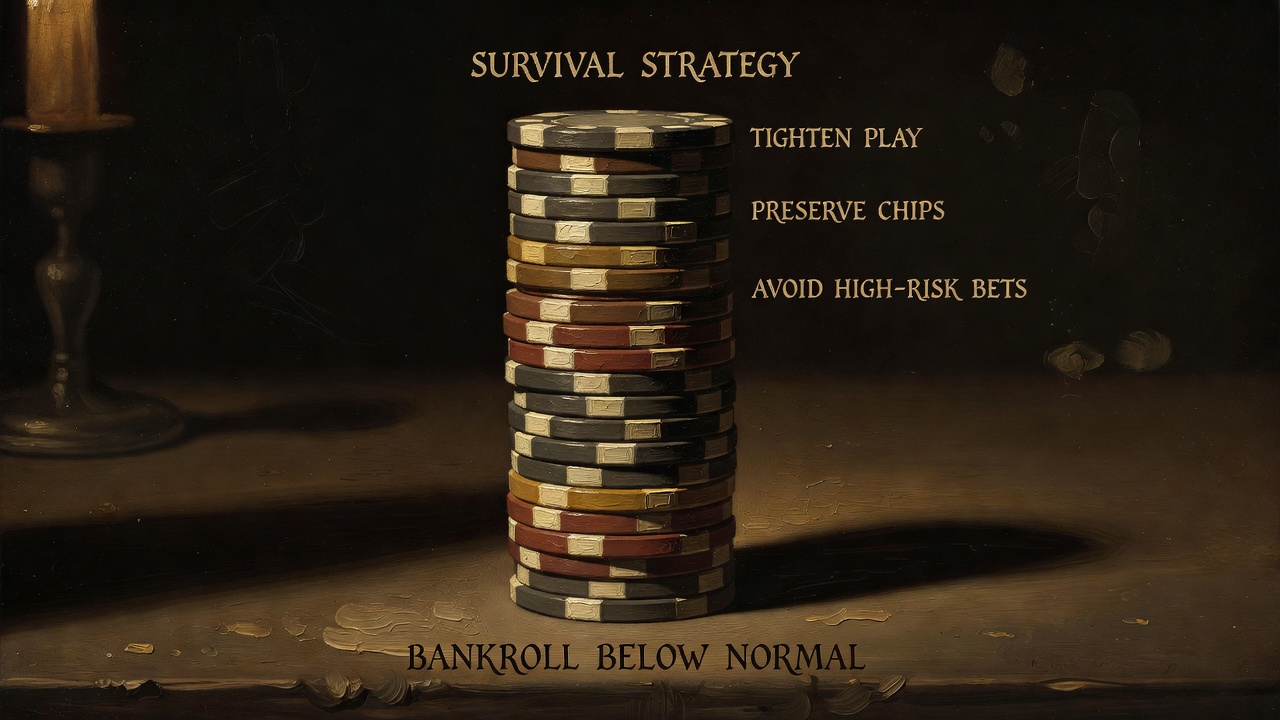
Being short-handed in poker is strange territory. Options exist, but each carries discomfort. You fold everything and watch attrition through blinds and antes. Slow erasure. Tighten your standards to premium hands and you suffer when it's your turn to act and you've missed several orbits. Accept aggressive play instead, committing often, knowing most spots will fail.
Marcus had won for three years. He'd learned methodically: books, videos, tournament circuits. He'd beaten smaller games. He understood six-max and full-table dynamics. But learning short-stack play without panic had eluded him. Short-stack poker differs fundamentally from regular poker. It demands calculation without emotion. Your opening range explodes. You can't afford to muck hands through multiple blinds; you'll disappear. So you shove with holdings you'd normally reject.
In his first critical moment, Marcus held king-seven from the small blind. The antes and small blind had built a 90-chip pot. His remaining stack: 47 chips. By the math, he had no choice. He moved all-in. Two opponents mucked. The button and big blind called. The flop: queen-jack-eight. He whiffed completely. Dead on the river. Gone.
But sitting there, cards exposed, Marcus grasped something crucial. He had acted correctly. His holding wasn't strong enough for a standard pot. In short-stack territory, though, standard doesn't apply. He was hunting blinds and antes. The math was simple: shove with any remotely playable hand, take down the dead money uncontested occasionally, and harvest chips when opponents fold. The calculation was inelegant. But correct.
When you're desperately short at a nine-max table, the entire game transforms. Nine players mean the blinds cycle slower. You might sit with 15-20 chips while blinds run 3-6. You're folding constantly, watching your stack evaporate. Then your button or small blind comes, and action becomes mandatory. The decision isn't about holdings anymore. It's about equity, ruin, and fold percentage.
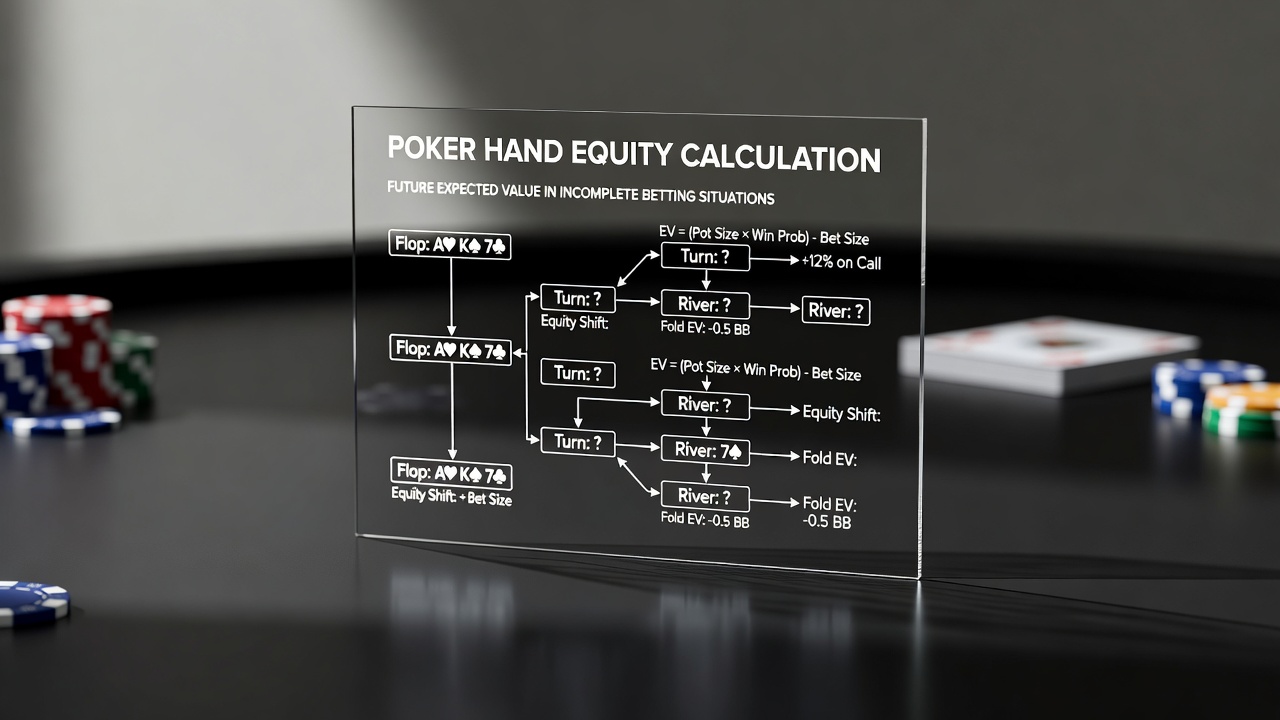
Fold equity matters here more than hand strength ever could. The probability your opponent exits rather than competes. When you're short, that fold percentage becomes more valuable than your cards. A marginal hand that causes everyone to abandon is worth more than a premium hand that loses at showdown. A weak holding that wins immediately beats a weak holding that reaches the river.
Marcus observed the UNLV kids executing this against another desperate player. Three seats over, someone shoved with nine-six. Scottsdale mucked. The retiree followed. The big blind, holding something worse, surrendered. The short-stacked player collected 45 chips he had no right to win. Suddenly he'd extended his life by two more rotations. Two more chances. Two more opportunities to find something playable from position.
"Short-stack poker isn't a puzzle to solve. It's arithmetic to execute. Emotion complicates things. Pressure complicates things. But the formula is straightforward: narrow your opening requirements, expand your positional range, accelerate when elimination nears. Fold equity outweighs hand equity. Urgency beats caution."
When Marcus's stack finally hit zero, he'd absorbed a critical lesson. He'd acted correctly on most spots. With ideal play, those 47 chips might've stretched 20 minutes. His early panic, his excessive folding, compressed it to six. He reloaded. He grinded longer. The real insight from playing short: chips in jeopardy cost less than chips safely hoarded, and initiating action early compensates for the danger that follows.