In this entry4 parts
The boy was twenty-five when the Lamborghini arrived. Bright orange. Gallardo. He parked it outside a Brisbane office block that also belonged to him, or to one of his companies, or to one of the shell entities between him and the companies, and he walked in past his own receptionist and made a coffee. Nobody stopped him. Nobody had reason to. Daniel Tzvetkoff, at that point in the winter of 2008, was the owner of a payment processor called Intabill that handled, by the best estimates anyone has offered since, between four and six hundred million U.S. dollars a month for American online poker players who wanted to put money into and take it back out of three sites whose American-facing operations were not, in the strictest legal reading, authorised to exist.
He made the coffee. He drove home. The house was in a suburb called Hamilton, overlooking the river, and it had, I kid you not, a moat. An actual moat. I saw the listing photos years later, the way you see the photos of a house after the owner has gone, and I thought: a boy who lived in a moated house never believed anyone was coming for him.
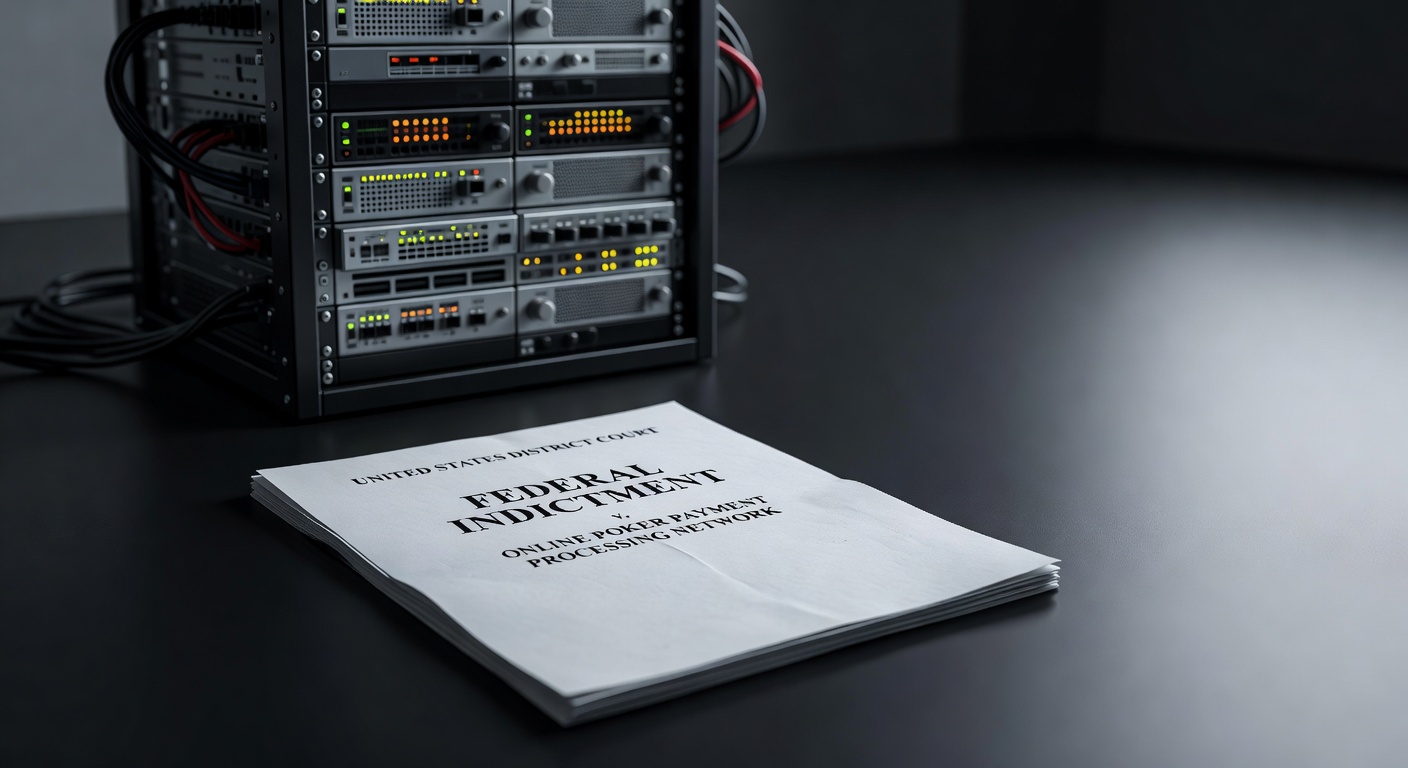
They came for him in April 2010, at the Bellagio, where he had flown to a payment-processing industry conference he should have known better than to attend. FBI agents met him in the lobby. He had been indicted in the Southern District of New York on charges of bank fraud, money laundering, and conspiracy.
They put him in the Metropolitan Correctional Center downtown and told him he was looking at seventy-five years. He was twenty-seven years old.
The Boy Before the Moat
Before any of this Tzvetkoff was a skinny, awkward software kid from Brisbane who had dropped out of university and set up a web-hosting business with an older friend named Sam Sciacca in the early 2000s. They did okay. They were not rich. The sort of small technology shop you meet in every second-tier city in the West. Sciacca was the grown-up. Tzvetkoff was the coder.
The break, if you can call it a break, came when they started building payment-processing rails for adult-entertainment sites. The ones in online gambling at the time were as difficult to bank as pornography, in some American jurisdictions more so, and the margins on processing their transactions were extraordinary. The fee Intabill charged, on every transaction, was roughly ten percent. On four hundred million a month, that is real money. It was real money so fast that the old-timers in the payment business, the sort who had spent twenty years learning their work one percent at a time, could not quite believe what they were seeing.
The three sites Intabill served were Full Tilt Poker, PokerStars, and Absolute Poker. The money flowed in. Tzvetkoff was twenty-four, twenty-five, now twenty-six, and he did what a boy does when the money is coming in faster than anyone he knew could spend it. He bought a Lamborghini. He bought a boat. He bought the moat.
And, the prosecutors in New York would later allege, he skimmed.
The Skim
The claim in the U.S. Department of Justice indictment, unsealed in April 2010, was that Tzvetkoff had kept for himself something in the neighbourhood of 118 million U.S. dollars that was supposed to have been settled to Full Tilt and PokerStars. The poker rooms had known. They had not been able to do anything about it, or had been reluctant, because pursuing Tzvetkoff in an Australian court meant opening a conversation about the legal status of their own American business. The rooms had simply absorbed the loss and stopped working with him.
By late 2009 Intabill was collapsing. Tzvetkoff filed for personal bankruptcy in Australia. He owed money to everyone. His lawyers were calling every week. His payment-processor partners in the United States, some of whom were already nervous about their own exposure, had started cooperating with federal investigators.
The Bellagio conference was the last thing in his old life.
The Deal
Here is where the story turns, and where the writer in me wants to slow down, because the turn is what the story is for.
The New York prosecutors, working under Preet Bharara, did not really want Daniel Tzvetkoff in prison for seventy-five years. They wanted the online poker industry. They wanted to prove, in a federal courtroom, that the three sites Intabill served had knowingly and systematically defrauded American banks by routing poker transactions through misrepresented merchant codes. Tzvetkoff knew how the routing had been done, because Tzvetkoff had done the routing. He was the witness.
He took the deal. He agreed to cooperate. In exchange the government dropped most of the charges and he received, eventually, a sentence of time served plus probation. He was on a plane back to Australia within a couple of years.
The information he provided was at the heart of what became, on April 15, 2011, Black Friday. That morning the FBI unsealed indictments against Full Tilt Poker, PokerStars, and Absolute Poker, and seized their dot-com domain names. American players woke up to find their accounts frozen. Full Tilt, it turned out, did not have the player funds it claimed to have. The operational collapse that followed cost many players their savings and ended the first era of American online poker.
Tzvetkoff, back in Brisbane, did not return phone calls.
What He Left Behind
Years later I read a short piece by an Australian journalist who had tracked him down, living quietly, trying to start a new business, declining interviews. The moated house had been sold. The Lamborghini was long gone. He was, by his own account, trying to become the kind of ordinary man he had skipped over becoming the first time.
I do not know if he got there. I have some sympathy. Not because he did not earn what happened to him, because he did, but because the thing the story always reduces to, when you sit at it long enough, is a kid who found a money spigot too big for him and did not know how to turn it off. The sadness of that, and the sadness of the poker players who lost their deposits when Black Friday hit, are not contradictory. Both are true. Both are what the story holds.
The American online poker industry has, fourteen years on, rebuilt itself inside state-regulated frameworks in New Jersey, Pennsylvania, Michigan, and a handful of others. The rooms are smaller. The money is slower. No moats, no Lamborghinis. The kid who broke the old industry did not, I think, want the industry to end. He wanted a house on the water. That is what most of them wanted. That is what most of them want still.