I spent fourteen years watching people try to cheat the sportsbook. What I learned is that esports betting attracts a different breed of operator. They're smarter. They study the game the way a card counter studies deck composition. They don't get emotional. They don't chase. They just exploit the soft spots in our markets and disappear.
How the Maps Create Asymmetry
League of Legends has five maps in competitive play, and each one favors different strategies. Most bettors treat the game as monolithic. They see "League" and bet on the team, the roster, the narrative. The sharp operators? They're asking which map. It matters more than you'd think.
Summons Rift, the main competitive arena, is a 5v5 map where macro play (team positioning, objective control) often outweighs mechanical skill. A team weak at teamfighting but strong at wave management can steal games. Here's where the mismatches show up: a team ranked high overall might collapse on this specific map when objective pressure matters more than raw mechanics.
Twilight Trials and the rotating modes add friction. Sportsbooks have to price these separately or risk taking bad action. I watched bettors hammer the chalk on a squad that hadn't played the rotating mode in six months. They were betting on name value, not current information. The sharps knew the gap. They bet against the public.
- First-phase champion selection matters more than most casual bettors realize. In esports betting, pick-ban sequences tell you what teams fear in each other.
- Mid-lane control determines around 60% of early-game outcomes. If a team's midlaner is injured or underperforming, the whole early rotation suffers.
- Baron Nashor pit control (securing the map's major objective) is where games flip. Teams that win Baron go 75%+ to win the match afterward.
- Jungle proximity to objectives creates timing windows. A team that rotates its jungler to objectives three seconds faster wins more teamfights.
The Markets You Should Know
Match winner is the baseline, and it's priced tightly at the major books. That's where the sharps play. You can't beat that line if you're doing public analysis.
Map winner pools are where leakage happens. When a team is favored on Summons Rift but plays multiple maps, the book has to hedge. Sometimes the market misprices the underdog on a specific map because the bettor pool doesn't think in those terms.
First blood markets are a chaos engine. I watched one operator hit the same first-blood timing plays against the same jungle paths six times in a season. He knew the patrol routes better than the teams did. By the time the book caught on, he was up six figures.
Kill differentials in the first 10 minutes create micro-markets. A team that loses early kills but wins macro pressure has a kill differential that looks bad but doesn't predict outcomes well. The public bets the kills. The sharps bet the win.
"The market is smarter when betting is close. When three teams are clearly better than everyone else, the book has to juice the lines hard. That's when the real value collapses into smaller markets: side props, series predictions, tournament futures." That's how the pros talk about it.
What the Books Are Watching
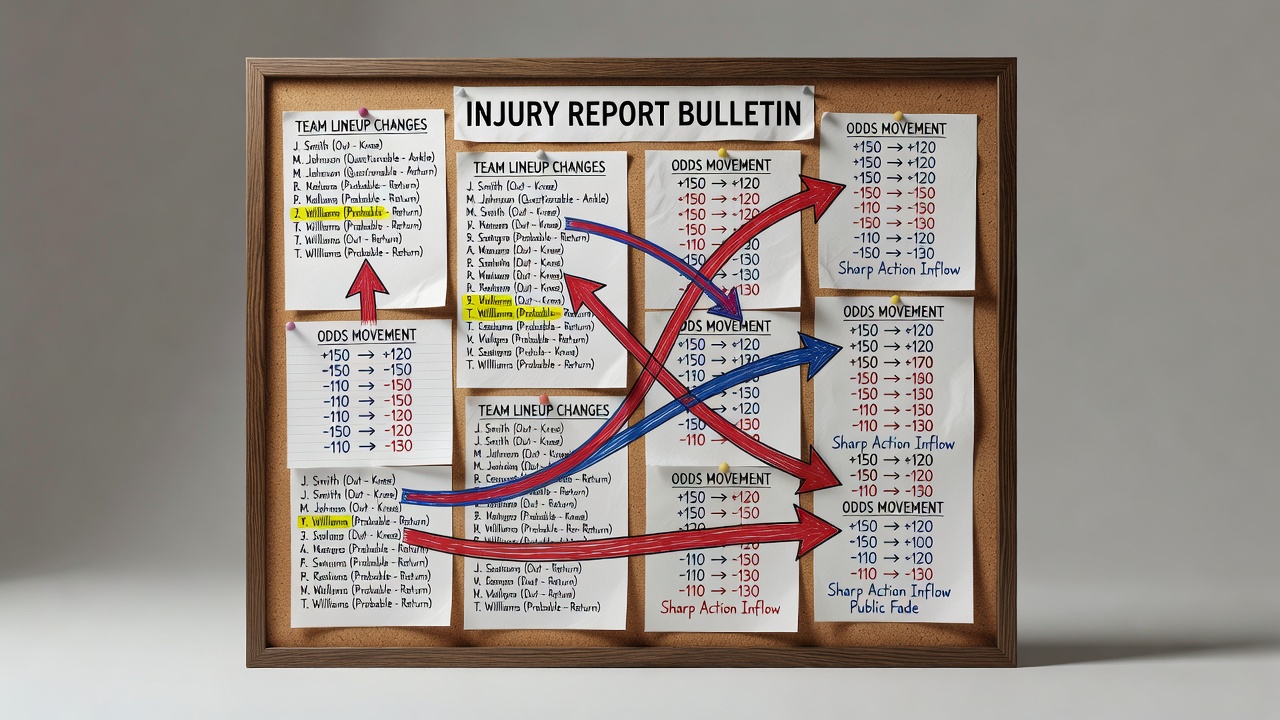
Week-to-week roster changes matter in esports more than other sports because substitution happens mid-tournament. A support player can be swapped with 24 hours' notice. The public lines don't always react fast enough. If you're tracking roster status in real time, you catch 12-hour windows where the market hasn't adjusted.
Industrial betting-pattern surveillance has gotten strict. We look for the same operator hitting three different books with opposite sides of the same match. That's arbitrage, and it's usually automated. The sharps use different accounts, different IP ranges, different cities. The technical cat-and-mouse hasn't stopped.
Practice scrimmage results leak constantly. A team's 2-3 record in scrims before Worlds might signal trouble, but sharps know that scrims aren't predictive the way they used to be. Teams sandbag. They hide strategies. The info has lost its edge.
The tell is patience. A bettor who hits League of Legends consistently isn't sweating the short-term variance. He's playing a long-season thesis: this team's macro improves in weeks 5-9. This player's champion pool expands mid-tournament. These two teams historically struggle in Bo5 formats. By the time the line moves, he's already three steps ahead.
Wings for this entry