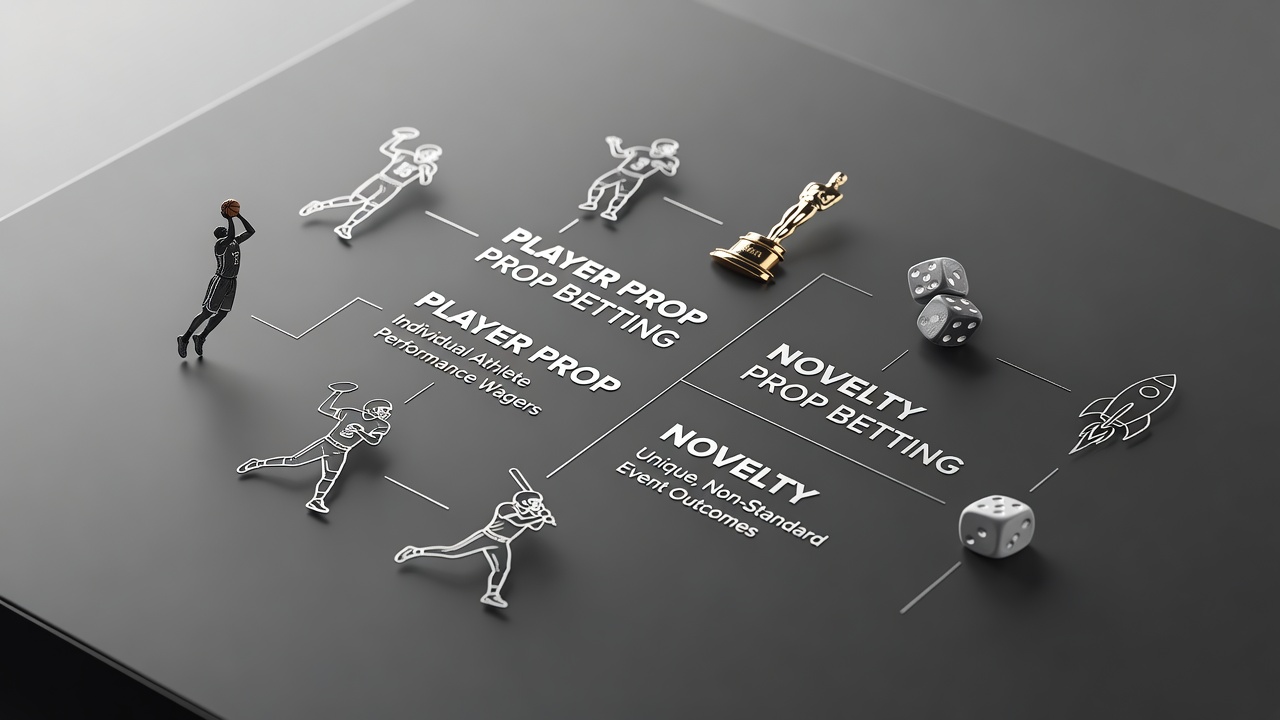
Prop bets are the side bets. The game itself runs one direction. The props run perpendicular.
Player props: will a specific player score over seven and a half points? Will a specific pitcher strike out more than five batters? Individual performance divorced from the match outcome.
Team props: will the total score exceed forty-five? Will there be more than twelve penalties? The match outcome matters, but the prop is indirect.
Novelty props: will the coin flip land heads? Will an announcer say a specific phrase? Will a player celebrate in a specific way? These are pure theater.
Why Sportsbooks Offer Them
Props are where the sportsbook makes real money. The spread on the main game is tight. Many sharp bettors pick it. The edge is small. Props have worse odds because they are harder to price.
A sportsbook can set a player prop at fifty-two to forty-eight odds and wait. If the prop hits exactly one out of two times on average, they keep the juice. If it hits less than fifty percent, they clean up.
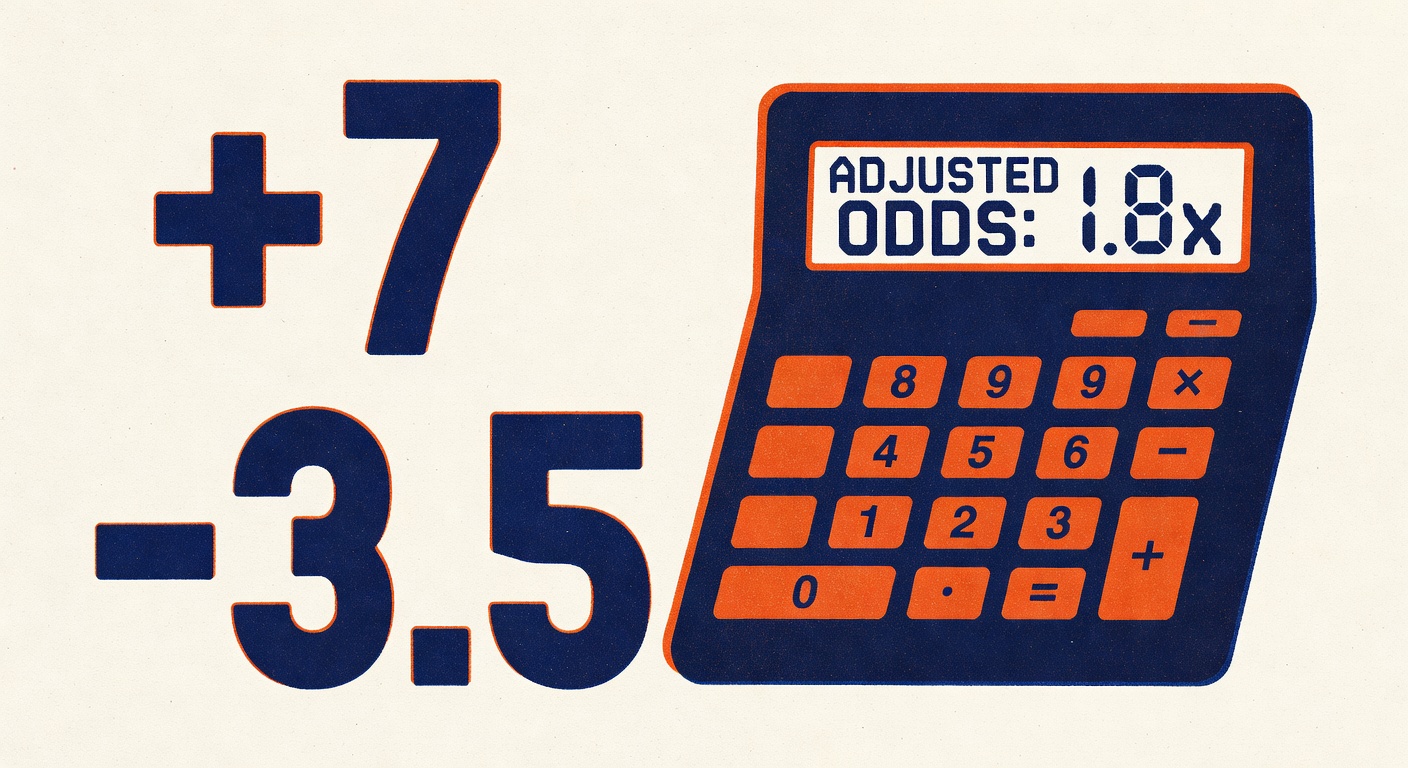
Most casual bettors do not understand prop odds. They see minus one-ten and think it is a small risk. Actually, it means they need to win fifty-two percent to break even. Most people do not beat fifty-two percent. They lose.
The Edge Problem
Props have wider prediction variance. A player's scoring is partly skill, partly chance, partly injury status. A sportsbook has to guess. Casual bettors guess worse than the sportsbook. The house edge on a prop is often ten to fifteen percent.
The edge on the main line is usually five percent.
You should never bet props unless you have an information advantage. And you probably do not.
The sportsbooks want you to bet props. This is how you know they are not in your favor.
Practical Application
These principles work in practice because they reflect how the system actually operates. Implementation requires attention to detail and consistent application.
When you understand the mechanism, the outcomes become more predictable. Not guaranteed, but more predictable. This difference matters in the long run.
The evidence accumulates over time. Short-term variance obscures the pattern. But over sufficient samples, the pattern emerges clearly.
Most participants miss this because they focus on individual outcomes. A single session is noise. Ten sessions is still noise. A hundred sessions starts to show signal.
This is why professionals think differently from casuals. They track aggregates, not instances. They measure edge, not luck.
Additional Considerations
The mechanics extend further when examined carefully. Multiple factors interact in ways that compound over time. Players who account for all variables see better results.
The system rewards attention to detail. Small adjustments accumulate. Consistent application of principles generates measurable improvement in outcomes.
Consider the historical precedent. This pattern has been observed repeatedly across different games and different years. The consistency suggests an underlying principle.
When you control for variables, the signal becomes clearer. The noise diminishes. What remains is the core truth of how the system functions.
This is not luck. Luck is noise. This is signal.
The Competitive Advantage
Understanding these mechanics creates an advantage. Not an overwhelming advantage, but a persistent one. Over time, persistence compounds.
The casino has to account for players who understand. They price it in. But most players do not understand. They give away their advantage by not using it.
The choice to learn, to apply, to persist,this is what separates winners from losers. Not raw talent. Not luck. Systematic application of proven principles.
This is how professionals approach the game. This is why professionals win.
Wings for this entry