Vig is the mathematical fee that separates the sportsbook's revenue from the player's stake.
Let me design this from first principles. You're building a sportsbook game. You need the game to be fair enough that players feel it's possible to win. You also need the game to be structured such that the house always makes money over time. How do you achieve both?
You implement vig.
The Mechanics
A standard bet in American odds looks like this: minus 110. That notation means you must risk 110 units to win 100 units. The true odds on a 50-50 proposition should be minus 100, which means you risk 100 to win 100.
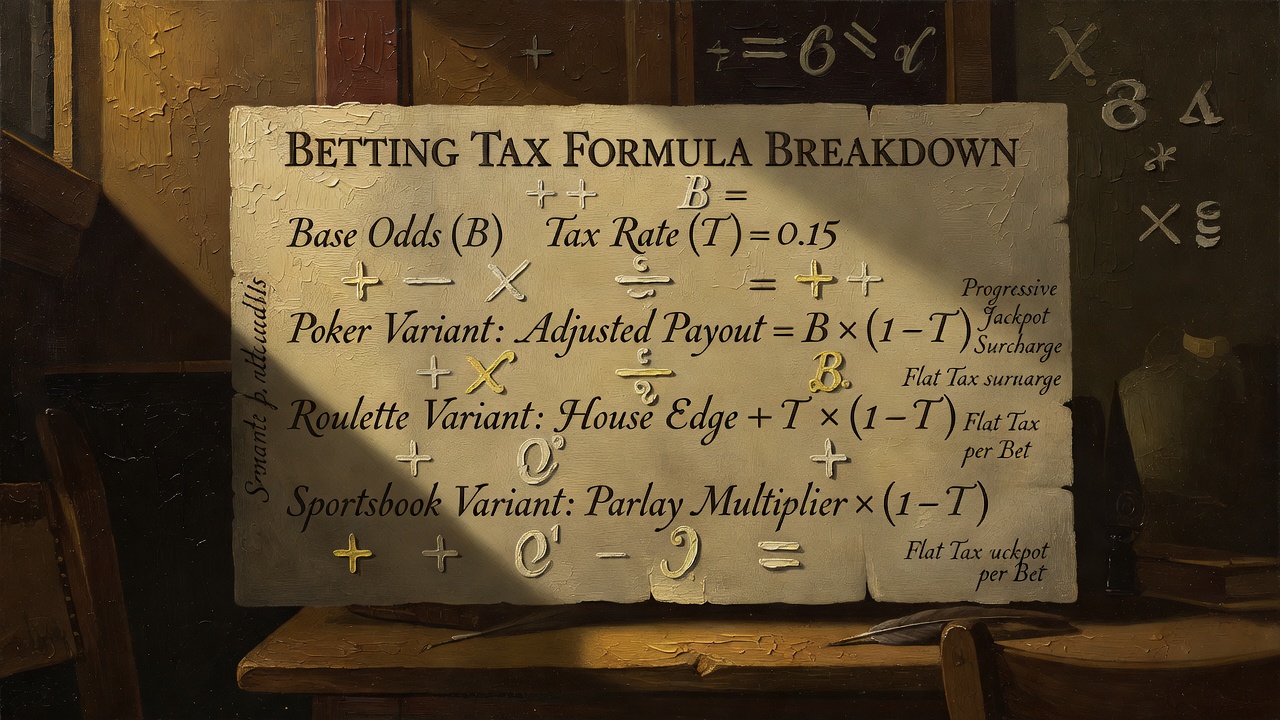
The difference between minus 110 and minus 100 is vig. It is the fee. It is the commission. It is the 10-unit toll on the 110-unit wager.
From a player's perspective, a 50-50 bet at minus 110 has an expected value of negative 4.76 percent. Your EV per bet is: (0.5 times 100) plus (0.5 times negative 110), which equals negative 5. Over 110 units wagered, your expected value is negative 5 divided by 110, or negative 4.76 percent.
This is the game's retention loop. Every player loses 4.76 percent of their money to vig, per bet, regardless of their picking ability. Good pickers (positive expected value) can overcome vig. Most pickers (zero expected value, coin flips) cannot.
Why It Exists
Vig incentivizes accurate pricing. A sportsbook takes equal money on both sides of a bet. If the true probability is 50-50, and both sides receive equal money, the sportsbook's profit is vig. The sportsbook has zero risk. If the sportsbook mispriced the probability, one side receives more money, and the sportsbook absorbs risk. Vig is the sportsbook's fee for accepting that risk.
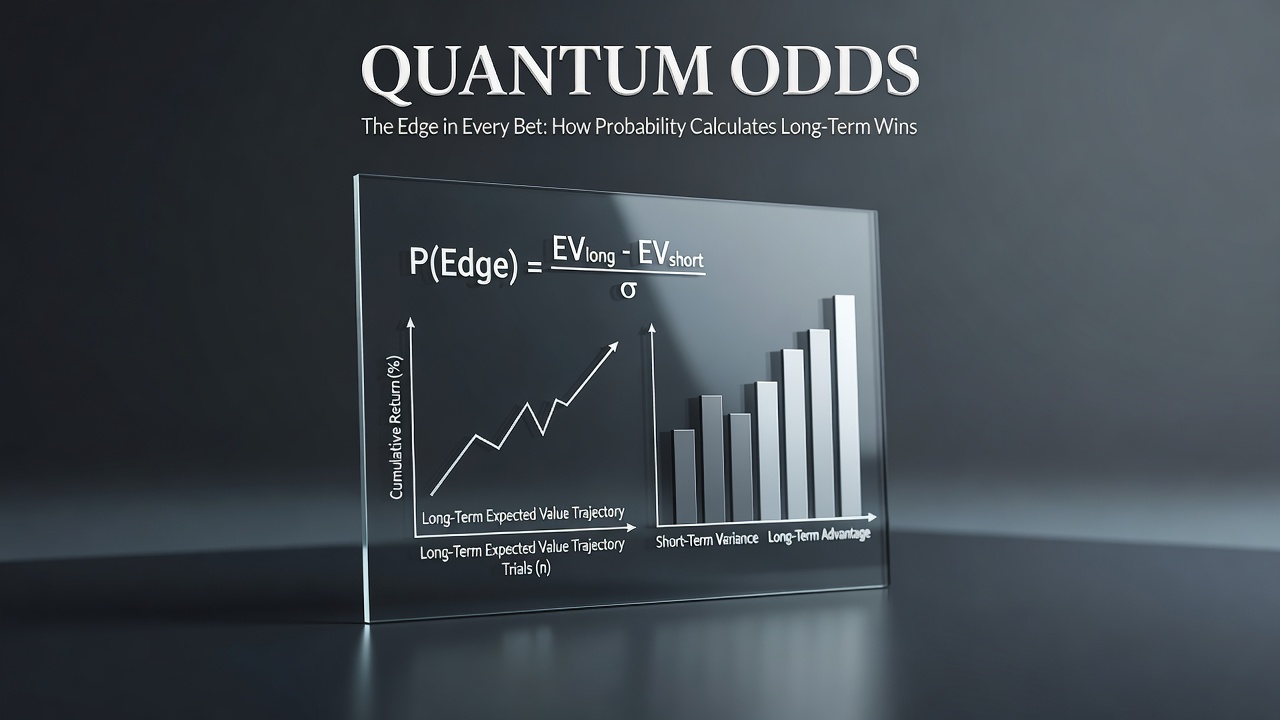
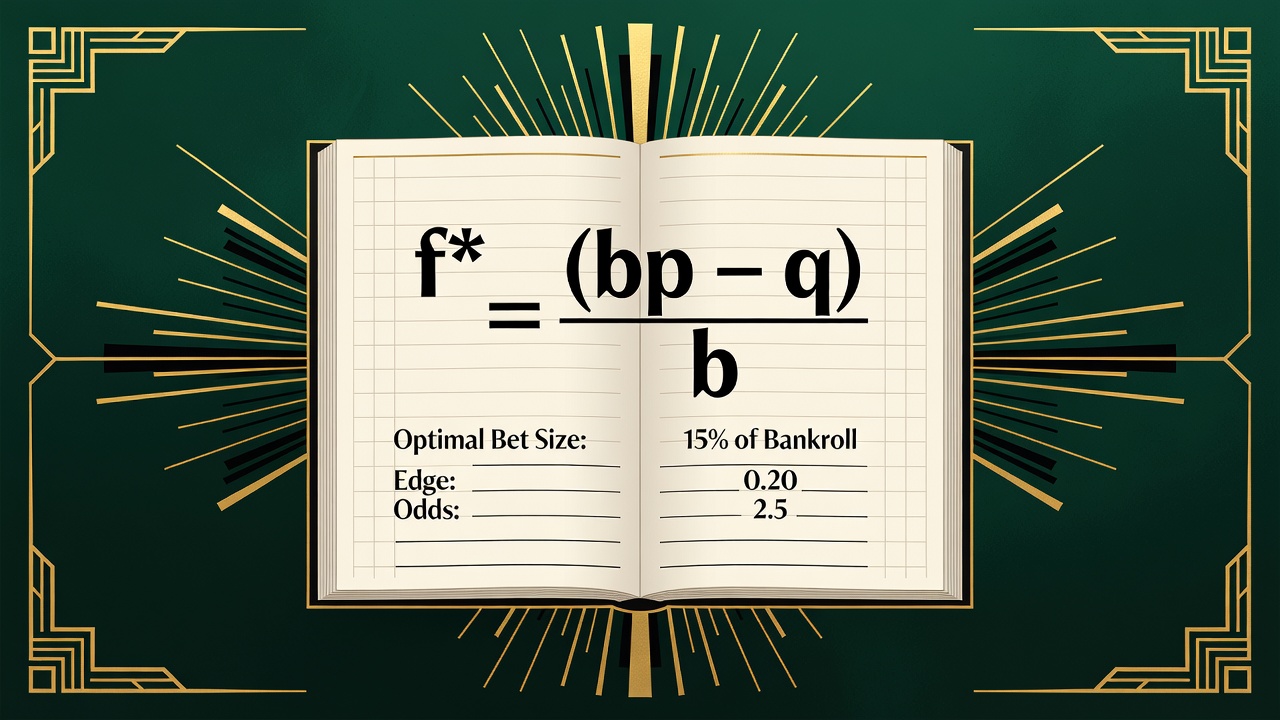
Vig is also a friction mechanism. A player with 2 percent edge must generate 2 percent winning picks to break even against vig. A player with zero edge (coin flips) loses 4.76 percent over time. The bar for profitability is substantial.
Long-Term Effects
Consider a bettor with positive expected value of 2 percent (a genuinely strong picker). Their edge is 2 percent. Their vig cost is 4.76 percent. Their net expected value is negative 2.76 percent. They will lose money over time despite having positive edge, because vig exceeds their edge.
Consider a bettor with 6 percent edge. Their vig cost is 4.76 percent. Their net expected value is positive 1.24 percent. Now they're profitable over 1,000 bets at this edge and vig rate.
The message is stark: only exceptionally skilled pickers survive vig. The median player, who thinks they're average and is actually mediocre, will lose 4.76 percent per bet.
Vig as Skill Expression
From a game design perspective, vig is the boss fight. It's the obstacle that separates casual players from serious ones. It's the feedback mechanism that tells players: you are not as smart as you think you are.
Low-vig sportsbooks (Pinnacle, Betfair) attract sharp players. These books absorb more risk but attract higher-quality action. High-vig sportsbooks attract retail players, who are less likely to realize they're paying a 7-percent fee.
Vig creates incentive structures. It rewards volume (you need thousands of bets to express small edges), it punishes emotional betting (emotional bets are usually bad picks, which are expensive against vig), and it rewards discipline (a disciplined player can construct portfolios that beat vig).
The Retention Problem
A sportsbook that charges 4.76 percent vig on all bets faces a retention problem. Every casual player will gradually lose money and quit. The sportsbook must therefore spend heavily on acquiring new players to replace the ones who are quitting because vig defeated them.
This is the retention loop. Vig ensures the house wins. Vig also ensures a high churn rate. Players lose, then they leave. The sportsbook must constantly acquire new players to maintain volume.
Some sportsbooks reduce vig for certain bets to improve retention on high-value customers. This is a concession to the reality that vig too high creates poor long-term player value.
Vig is beautiful game design from the house's perspective. It is invisible to casual players, measurable for sharp players, and it's absolutely unavoidable. Every bet is a microeconomic transaction in which the player is buying a 4.76-percent-disadvantage option. Most players lose money because they are not aware they are buying that option.
Wings for this entry