On March 14, 2024, a player on a regulated Ontario site recorded 2,400 spins of Pragmatic Play's Big Bass Bonanza at a stake of C$0.50. He logged them in a spreadsheet. By the end, he was down C$483.
He posted the spreadsheet to a public forum. That is where this story begins.
Big Bass Bonanza is not an obscure title. It is one of the top-grossing slots in licensed markets globally. The Alcohol and Gaming Commission of Ontario (AGCO) Game Integrity testing regime requires the published RTP figure to be verified by an accredited lab. Gaming Laboratories International (GLI) certifies the title at 96.71 percent theoretical return to player. That figure is not in dispute.
What the player's spreadsheet showed, and what the math behind the game confirms, is this. A 96.71 percent RTP does not mean every session, or every thousand spins, returns anywhere near 96.71 percent. It means that across the lifetime of the game, across billions of recorded spins on the Pragmatic Play server logs, the return converges on that number. For any individual session, variance dominates.
The Hit Rate Number the Marketing Page Does Not Advertise
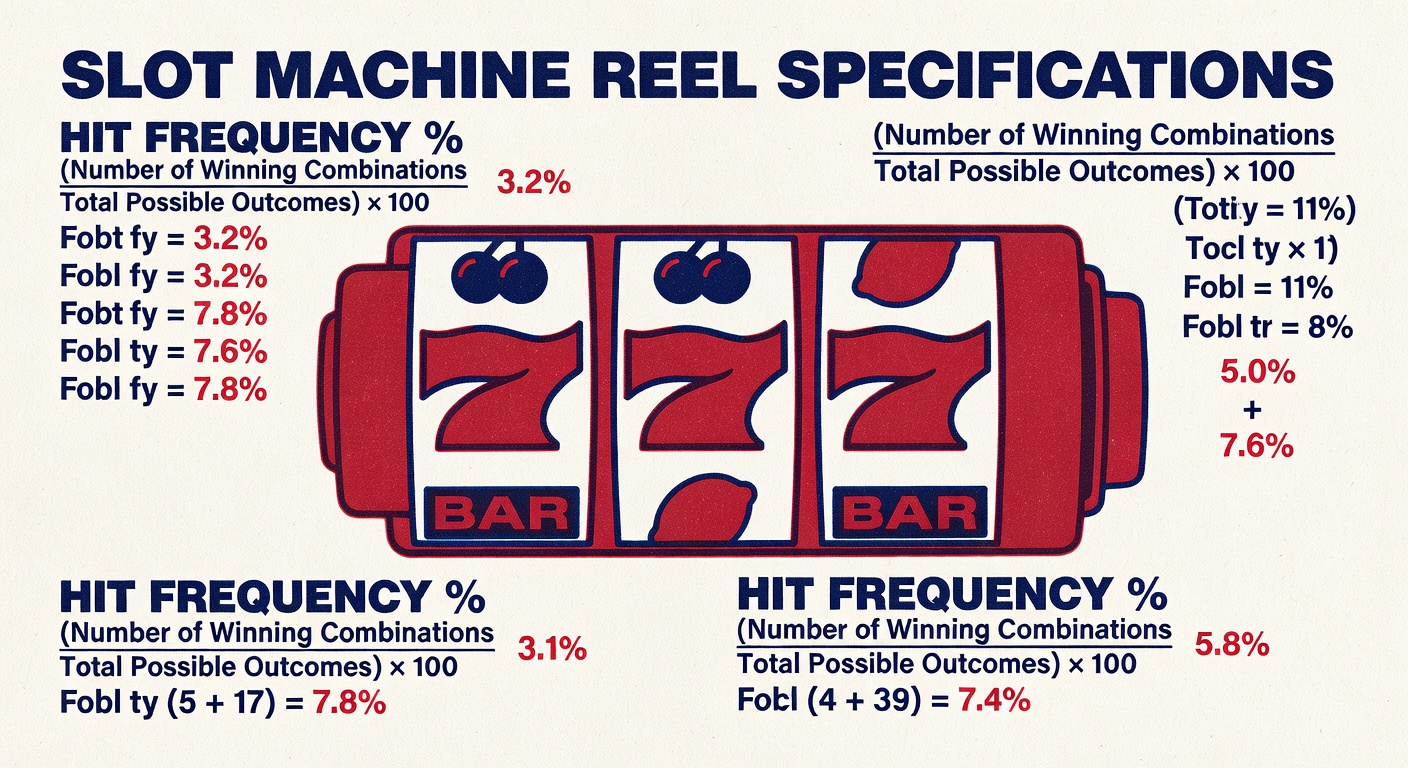
Pragmatic Play publishes an RTP. Pragmatic Play does not prominently publish the hit rate. On the GLI certification document filed in Ontario and in several European jurisdictions, Big Bass Bonanza's hit frequency is listed at 25.58 percent. That is roughly one paying spin in four.
That figure includes any winning line combination, down to a base symbol pair returning 0.2x the stake. On a C$0.50 spin, that is a C$0.10 return. The spreadsheet player recorded 614 winning spins across 2,400 attempts. Divide and you get 25.58 percent, to the decimal.
So the published number is accurate. The game pays, by its own definition, once every 3.9 spins.
The subjective experience of the player was not that. He described the game as "brutally tight." He was not wrong either. Of his 614 wins, 398 returned less than his stake. He was paying C$0.50 to receive C$0.10 or C$0.20 back, pressing spin, and watching the balance drop anyway.
Volatility as the Missing Variable
GLI rates Big Bass Bonanza as a high-volatility slot. The certification documents define high volatility using a standard deviation metric on simulated return per spin. For Big Bass Bonanza, the standard deviation on a 100-spin sample is approximately 6.2 units of stake.
What this means in practice is straightforward. The 96.71 percent RTP is delivered in uneven lumps. The base game, where the player spends most of his spins, pays out at a return materially below the headline figure. The difference is made up by the Free Spins bonus, where the Fisherman collect-feature can deliver multi-hundred-times returns. The spreadsheet player triggered Free Spins 11 times in 2,400 attempts. Certification documents list the trigger probability at roughly 1 in 222 spins.
Of those 11 bonus rounds, nine returned between 20x and 80x his stake. Two returned under 5x. None returned the 500x or above that would make the session significantly profitable.
This is not malfunction. This is design functioning exactly as documented. A high-volatility slot delivers its advertised RTP across thousands of recorded bonus rounds. A single player logging 11 bonus rounds is not in the long run. He is in the variance band where any outcome between -70 percent and +200 percent is statistically unremarkable.
Why the Industry Documents This and the Marketing Does Not
The certification file is public in Ontario. It runs to 43 pages. A reader who wants to find the hit rate, the volatility rating, and the standard deviation can find them. A reader who reads only the game info panel inside the slot itself will see RTP and nothing more.
EU regulators, specifically the UK Gambling Commission and the Malta Gaming Authority, now require a volatility disclosure directly inside the game info screen. The disclosure is categorical, not numerical. Labels are Low, Medium, High, Very High. Pragmatic Play labels Big Bass Bonanza as High. That label is present. How many players read it is another question.
The spreadsheet player, questioned on the forum, said he had not noticed the label.
What the Session Tells Us
His 2,400 spins returned 90.56 percent of stake, or C$2,173 on C$2,400 wagered. That figure sits about 6.2 percent below the lifetime RTP. Against the volatility profile, it is an ordinary session. It is not evidence of a tight machine or a loose one. It is evidence that 2,400 spins on a high-variance product is not a sample size.
The filings were always there. The player logged the data himself. The gap is between what is disclosed on a regulator's server and what a player reads before pressing spin.
Wings for this entry